


California’s 50 Richest Suburbs, 2025: Where Ultra-Wealthy Families Call Home

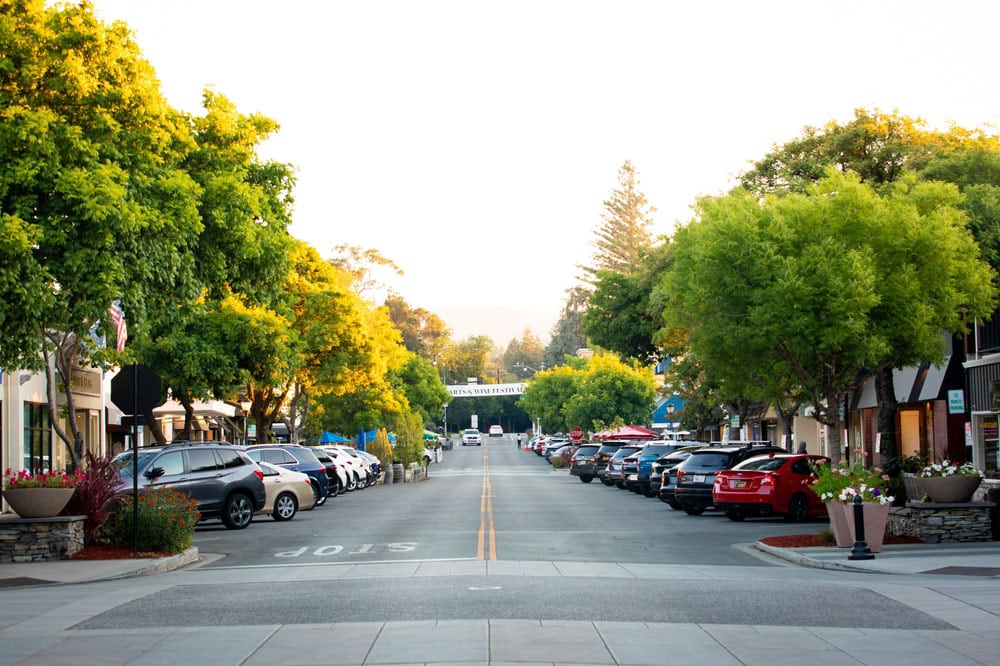
The Wealth Geography of the Golden State: California has always been synonymous with wealth creation — from Silicon Valley tech fortunes to Hollywood dynasties and global investors who make the state their base. Yet the story of California’s prosperity is not written in its downtown towers alone. Increasingly, it is told in the quiet power of its suburbs — exclusive enclaves where mean household incomes soar into the hundreds of thousands, and typical home values often top multimillion-dollar thresholds.
For CEOs, private equity investors, family offices, and policymakers, understanding the shifting geography of wealth is more than an exercise in curiosity. These communities represent concentrated hubs of influence, generational wealth, philanthropic capital, and investment potential.
Bay Area Dominance: The Epicenter of Affluence
Of California’s 50 richest suburbs in 2025, eight of the top 10 are located in the Bay Area. Los Altos claims the No. 1 position, with a mean household income of $404,000 and typical home values at an eye-watering $4.3 million. The wealth generated by Silicon Valley continues to ripple outward, lifting neighboring towns such as Alamo, Orinda, Saratoga, and Menlo Park.
This clustering is no accident. The Bay Area’s wealth is fueled by venture capital flows, IPO liquidity events, and the gravitational pull of Big Tech. High-net-worth individuals (HNWIs) seeking proximity to innovation hubs — yet desiring suburban privacy — have concentrated demand in these zip codes.
Los Angeles County’s Crown Jewels
Beyond Silicon Valley, Southern California also boasts its share of rarefied air. Palos Verdes Estates and La Cañada Flintridge stand as Los Angeles County’s elite suburban representatives in the top 10. With mean household incomes north of $317,000 and home values approaching $2.7 million, these enclaves offer a blend of oceanfront prestige and gated-community privacy.
For policy makers, these communities represent both economic engines and pressure points in a region grappling with affordability challenges. For investors, they remain attractive for luxury real estate plays, family office relocations, and legacy asset holdings.
The Economics of Exclusivity
The data tells a compelling story. California’s wealthiest suburbs are defined not only by incomes but by barriers to entry — zoning restrictions, limited land availability, elite school districts, and reputational cachet. In Los Altos or Menlo Park, even earning $350,000 may feel middle-class once mortgage, property taxes, and lifestyle costs are factored in.
This paradox — high incomes paired with equally high costs — underscores the complexity of wealth in California. For executives and HNWIs, suburban residency is as much about network positioning and community signaling as it is about square footage.
Why This Matters for Leaders and Investors
For CEOs and private equity investors, these rankings are more than real estate trivia. They reveal:
- Concentrations of high discretionary spending power — critical for luxury, wealth-management, and philanthropic sectors.
- Talent density — many executives, entrepreneurs, and technologists reside in these suburbs, shaping where deals are discussed informally.
- Policy implications — wealth clustering impacts tax bases, housing policy, and regional planning, influencing both risks and opportunities for business leaders.
In short, the richest suburbs are where influence lives.
California’s 50 Richest Suburbs, 2025
| City | Mean household income | Typical home value | Homes |
|---|---|---|---|
| Los Altos | $404K | $4.3M | 10.8K |
| Alamo | $403K | $2.5M | 5.1K |
| Orinda | $369K | $1.9M | 7.4K |
| Palos Verdes Estates | $367K | $2.7M | 5K |
| Saratoga | $344K | $3.9M | 10.8K |
| Menlo Park | $339K | $2.7M | 11.6K |
| San Carlos | $335K | $2.4M | 11.1K |
| Lafayette | $320K | $1.9M | 9.2K |
| Los Gatos | $318K | $2.5M | 12.8K |
| La Canada Flintridge | $317K | $2.4M | 6.4K |
| Coto de Caza | $312K | $2M | 5K |
| Palo Alto | $309K | $3.5M | 26.1K |
| Mill Valley | $308K | $2M | 5.5K |
| Cupertino | $296K | $3M | 21.1K |
| Manhattan Beach | $291K | $3.1M | 13.3K |
| Danville | $284K | $1.9M | 15.5K |
| Moraga | $263K | $1.6M | 5.6K |
| Belmont | $258K | $2.2M | 10.5K |
| Calabasas | $256K | $1.7M | 8.8K |
| North Tustin | $255K | $1.7M | 8.9K |
| Beverly Hills | $251K | $3.4M | 14.3K |
| Newport Beach | $249K | $3.4M | 38.1K |
| Mountain View | $248K | $2M | 34.9K |
| Sunnyvale | $246K | $2M | 58.8K |
| Granite Bay | $242K | $1.1M | 7.5K |
| Foster City | $242K | $1.8M | 12.9K |
| San Anselmo | $241K | $1.6M | 5.1K |
| Pleasanton | $239K | $1.6M | 27.6K |
| Dublin | $238K | $1.3M | 23.8K |
| Burlingame | $237K | $2.6M | 12.3K |
| San Ramon | $236K | $1.6M | 29.7K |
| Hermosa Beach | $235K | $2.2M | 8.9K |
| Laguna Beach | $234K | $2.9M | 10.8K |
| Ladera Ranch | $234K | $1.4M | 7.4K |
| Rancho Palos Verdes | $231K | $1.8M | 15.3K |
| Redwood City | $224K | $1.8M | 30.2K |
| Santa Clara | $220K | $1.7M | 48.6K |
| Agoura Hills | $217K | $1.2M | 7.1K |
| Solana Beach | $216K | $2.1M | 5.4K |
| Oak Park | $216K | $1.1M | 5K |
| Fremont | $214K | $1.5M | 77K |
| Larkspur | $213K | $2.1M | 6.2K |
| Millbrae | $210K | $2M | 8K |
| El Dorado Hills | $210K | $925.7K | 17.8K |
| Milpitas | $209K | $1.5M | 24.7K |
| Encinitas | $207K | $1.8M | 24.1K |
| Newark | $207K | $1.3M | 15.2K |
| Campbell | $207K | $1.9M | 16.6K |
| San Mateo | $205K | $1.6M | 39.8K |
| Coronado | $203K | $2.4M | 7K |
A Window Into the Future of Wealth
Looking ahead, the map of California’s richest suburbs will likely continue to evolve. Trends shaping the next decade include:
- Remote work migration — opening opportunities for inland and secondary luxury suburbs.
- Generational wealth transfer — as millennials inherit assets, preferences may shift toward more sustainable, amenity-rich communities.
- Climate resilience — wildfires, water scarcity, and coastal vulnerabilities will reshape long-term desirability and insurance costs.
For family offices, hedge funds, and institutional investors, monitoring these dynamics is essential for both risk management and opportunity spotting.
Executive Takeaway
California’s 50 richest suburbs in 2025 are more than just desirable addresses — they are concentrated ecosystems of wealth, influence, and decision-making power. For CEOs, private equity investors, hedge fund managers, and ultra-wealthy families, understanding where money lives is a strategic lens into where opportunity flows.
As Silicon Valley continues to dominate, Southern California asserts its own brand of prestige, and inland suburbs eye their rise, one truth holds constant: in California, wealth doesn’t just shape lifestyles — it shapes the future.
Have you read?
Best Websites For CEOs.
Countries that Shop Online the Most.
US States Ranked by Life Expectancy.
Global Mobility and Wealth Security: Why Citizenship by Investment (CBI) and Residency by Investment (RBI) Programs Are Essential for Global Executives and High-Net-Worth Individuals.
Add CEOWORLD magazine as your preferred news source on Google News
Follow CEOWORLD magazine on: Google News, LinkedIn, Twitter, and Facebook.License and Republishing: The views in this article are the author’s own and do not represent CEOWORLD magazine. No part of this material may be copied, shared, or published without the magazine’s prior written permission. For media queries, please contact: info@ceoworld.biz. © CEOWORLD magazine LTD