

Brazil Golden Visa 2026: Strategic Second Residency for CEOs, Family Offices, and Global Investors


Brazil Golden Visa: Why It Matters Now
For investors accustomed to European Golden Visas, Brazil’s regime is striking for its combination of affordability, speed, and scale of underlying economy.
- Brazil’s investor visa (often branded as a Golden Visa or VIPER) can offer permanent residency status from day one in certain routes, particularly business and real estate investments designated as “permanent” by immigration rules.
- Typical processing times run around four to six months, positioning Brazil as a practical option for executives who need a second residency in the medium term, not as a decade‑long project.
For C‑suite leaders, the strategic significance is twofold: a hedge against geopolitical and regulatory risk, and an operational foothold in a US$2‑trillion‑plus economy with deep capital markets and outsized consumer demand.
Residency, Presence Rules, and Path to Citizenship
One of Brazil’s most investor‑friendly features is its minimal ongoing presence requirement.
- Investor residents typically need to spend as little as 14 days in Brazil every two years to maintain status when targeting citizenship, a threshold highlighted by private client advisors and migration specialists.
- In practice, Brazilian law focuses on “uninterrupted residence,” but for investor visa holders, the benchmark is a low physical‑presence bar alongside continuity of permit and valid registration.
Citizenship is realistically achievable on a medium‑term horizon:
- Standard naturalization requires four years of legal residence, with the clock running from issuance of long‑term or permanent residence and subject to language and good‑character requirements.
- For higher investment levels or certain qualifying circumstances, some legal analyses and advisory firms point to potential reductions of the timeline to three years, particularly where larger real estate investments are made.
For an investor used to eight‑ to ten‑year citizenship timeframes elsewhere, this is materially competitive.
Global Mobility: The Value of a Brazilian Passport
Brazil’s passport increasingly ranks in the top tier of global mobility indices.
- Recent rankings show Brazilian citizens enjoying visa‑free, visa‑on‑arrival, or e‑visa access to around 169–171 destinations, including the United Kingdom, the entire Schengen Area, Singapore, Japan, and the United Arab Emirates.
- This puts Brazil broadly in line with or ahead of several European and North American passports on aggregate travel freedom metrics, particularly for travel to Europe, Latin America, and parts of Asia.
Coupled with Brazil’s long‑standing acceptance of dual citizenship, this makes naturalization a meaningful upgrade in both mobility and optionality, without forcing investors to give up their original nationality in most cases.
Investment Thresholds: Real Estate Route
The real estate track is the most visible component of Brazil’s Golden Visa offering and is priced aggressively relative to European peers.
- Standard minimum: approximately USD 200,000 in qualifying real estate in Brazil’s South, Southeast, or Center‑West regions, pegged in local currency at around BRL 1 million.
- Regional incentive: a 30% reduction in the minimum for investments in the North and Northeast, lowering the threshold to roughly USD 140,000 (around BRL 700,000).
For investors used to €500,000–€1 million thresholds in Europe before recent clampdowns, these entry points look modest.
- Real estate can include residential, commercial, or mixed‑use property, often with the option to generate rental yield while maintaining eligibility.
- Many structures allow co‑ownership or multiple units as long as the aggregate meets the statutory minimum and properties comply with immigration regulations.
This route is particularly compelling for:
- Family offices diversifying geographically while seeking hard‑asset exposure.
- Executives who want an anchor property in key cities such as São Paulo, Rio de Janeiro, or Brasília, or in growth regions benefiting from domestic infrastructure and energy investments.
Business Investment Route: Building into the Real Economy
Brazil also offers a corporate investment route that aligns residency with job creation and productive capital.
- Standard business investment threshold sits at roughly USD 100,000 (around BRL 500,000) into a new or existing Brazilian company, subject to approval by the National Immigration Council.
- For projects in priority sectors—such as technology, innovation, or strategic regional development—the minimum can drop to about USD 30,000 (around BRL 150,000), typically tied to job creation or demonstrable economic impact.
This route appeals to:
- Founders and operators seeking to scale into Brazil’s domestic market or leverage its manufacturing and services base.
- Private equity and venture investors who want residency linked directly to portfolio companies or local subsidiaries.
Regulators scrutinize business plans, corporate governance, and capital deployment, meaning investors must treat the route as both a real business decision and an immigration strategy.
Innovation, Science, and Technology Track
The innovation track—essentially a specialized business investment route—offers the lowest nominal entry point and is aligned with Brazil’s innovation and tech policies.
Minimum investment around USD 30,000 (BRL 150,000) targeted specifically at innovation, science, technology, or R&D‑heavy projects.
Typically requires:
- A vetted business plan.
- Demonstrable potential for job creation (often around 10 local jobs) or high economic impact.
For tech entrepreneurs and VC‑backed founders, this can be a capital‑light way to secure residency while building a local R&D or operations base in Brazil’s growing innovation corridors, such as São Paulo’s tech ecosystem or regional hubs in the South and Northeast.
Comparative Positioning: Brazil vs. Europe and Regional Peers
Brazil is positioning its Golden Visa as a direct response to tightening European regimes.
- Several European states have increased thresholds, curtailed real estate routes, or pivoted toward high‑value job creation, reducing the accessibility that once defined their programs.
- At USD 140,000–200,000 for real estate and USD 30,000–100,000 for business and innovation, Brazil undercuts many European thresholds by 60–80%, while offering exposure to an economy with a larger domestic market than most European Golden Visa jurisdictions combined.
Within Latin America, Brazil’s edge lies in scale and status:
- It is the region’s largest economy by GDP and population, with deep commodity, manufacturing, services, and consumer sectors supporting long‑term growth.
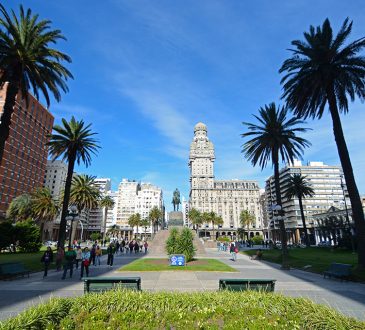
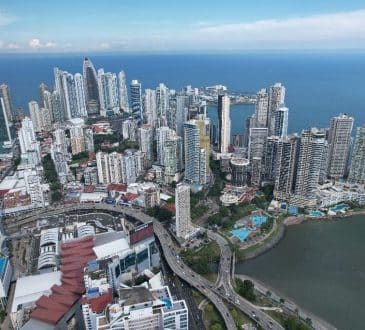
- For investors already evaluating Panama, Mexico, or Uruguay, Brazil offers a different profile: less about pure tax arbitrage and more about direct exposure to a large, complex, but opportunity‑rich market.
Practical Compliance, Processing, and Governance
From a risk and governance standpoint, Brazil’s Golden Visa requires the same level of professionalism as any serious cross‑border investment.
- Applicants must provide extensive documentation including proof of funds, clean criminal records, detailed investment documentation, and corporate filings where relevant.
- Legal counsel in Brazil is essential to navigate corporate structuring, real estate due diligence, tax implications, and immigration procedures.
Key operational considerations for executives:
- Taxation: Brazil taxes worldwide income for tax residents, so investors must coordinate with advisors to manage residency for tax purposes versus immigration status, often by carefully managing days in country and their personal tax profile.
- Presence rules: While immigration rules allow light physical presence to maintain status, extended periods in Brazil may trigger tax residency, which needs to be evaluated holistically.
Treating the program as an integrated part of global structures—rather than a standalone visa purchase—is where sophisticated investors will unlock the most value.
Strategic Use Cases for CEOs, PE, and Family Offices
Brazil’s Golden Visa can support several strategic objectives:
Market entry platform
- Use the investor visa to anchor a regional HQ, acquire local assets, or build operating companies in sectors such as agribusiness, energy, fintech, and logistics.
Mobility and diversification hedge
- Secure an alternative residency and eventual passport in a G20 democracy with global travel access, complementing European or North American citizenships.
Portfolio diversification
- Combine Brazilian hard assets (real estate) or operating businesses with residency rights, creating both financial and lifestyle upside.
Innovation footprint
- Deploy relatively modest capital to build tech, R&D, or innovation hubs that align with corporate digitalisation and emerging market strategies.
For many CEOWORLD readers, the question is not whether Brazil is “safe” but how to structure exposure intelligently—balancing political and currency risk against demographics, resource endowments, and structural reforms.
For CEOWORLD’s audience, Brazil’s Golden Visa is ultimately about pairing strategic capital deployment with long‑term mobility and market access—using a relatively modest investment to buy into the upside of Latin America’s biggest economy while locking in a credible second residency and, potentially, a second passport.
Add CEOWORLD magazine as your preferred news source on Google News
Follow CEOWORLD magazine on: Google News, LinkedIn, Twitter, and Facebook.License and Republishing: The views in this article are the author’s own and do not represent CEOWORLD magazine. No part of this material may be copied, shared, or published without the magazine’s prior written permission. For media queries, please contact: info@ceoworld.biz. © CEOWORLD magazine LTD