

Panama Golden Visa 2026: Residency by Investment for HNWIs, Family Offices, and Global Founders

Why Panama’s Golden Visa Matters to Global Leaders
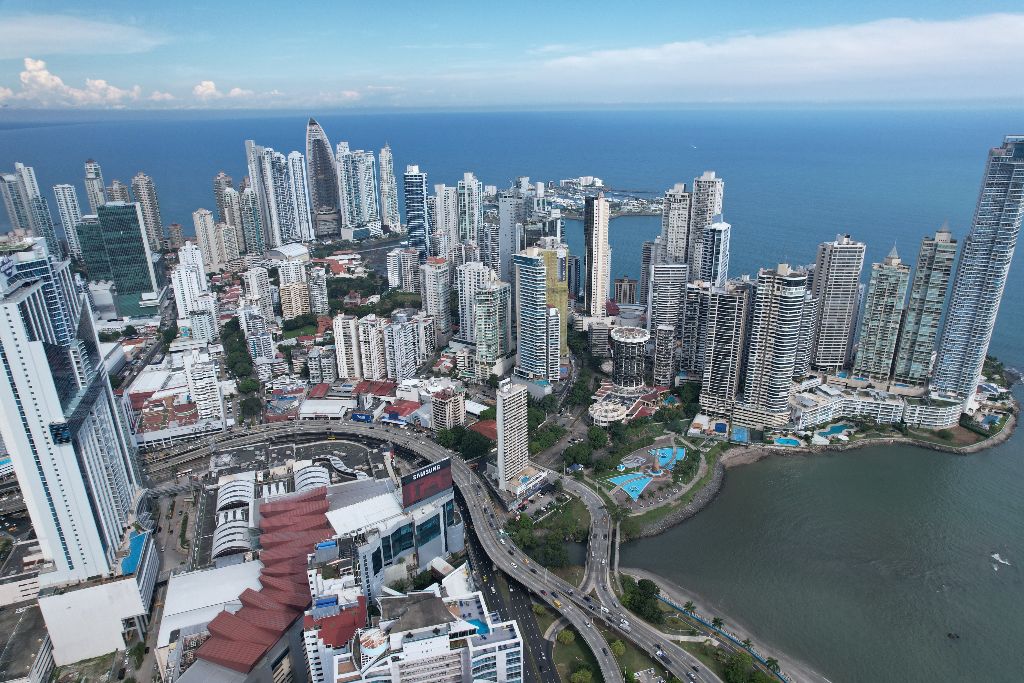
Panama’s residency-by-investment ecosystem sits at the intersection of geography, trade, and tax efficiency, making it particularly attractive for board‑level decision‑makers who think in terms of portfolios, platforms, and long‑term optionality. Positioned as a logistics hub and financial center anchored by the Panama Canal, the country offers investors both hard connectivity (ports, air links, shipping routes) and soft connectivity (legal, corporate, and financial services infrastructure) into Central and South America.
For many HNWIs, Panama is less about relocation and more about building an insurance policy against political risk, tax volatility, and future mobility constraints—a second residency that can mature into citizenship while preserving global income streams.
Strategic Location and Business Connectivity
Panama’s value proposition starts with geography and infrastructure rather than just immigration law.
- The country sits at the crossroads of North, Central, and South America, with Panama City functioning as a regional headquarters hub for multinationals and financial institutions.
- The Panama Canal remains one of the world’s most critical shipping corridors, supporting global trade flows and reinforcing Panama’s status as a logistics and maritime services powerhouse.
For CEOs and investors, this means residency is not only a lifestyle option but a platform to:
- Launch or scale regional operations across Spanish‑speaking Latin America.
- Structure holding companies, logistics entities, or trading platforms with efficient access to both Atlantic and Pacific routes.
The combination of Tocumen International Airport’s regional connectivity, the expanded canal, and an established services ecosystem makes Panama a pivot point for cross‑border expansion strategies.
Territorial Taxation: A Structural Advantage
Panama operates a strict territorial tax system, taxing only income sourced within its borders. For globally diversified executives, this is a structural—not marginal—advantage.
- Foreign‑source income, including dividends, interest, capital gains, and business profits generated abroad, is generally not subject to Panamanian income tax, regardless of the taxpayer’s nationality or residency.
- Income arising from activities, services, or assets located or used in Panama is taxable, which allows investors to ring‑fence Panama‑based operations while keeping foreign portfolios outside the domestic tax net.
In practical terms, this means:
- A family office with global holdings can anchor residency in Panama while maintaining tax efficiency on non‑Panamanian income.
- Digital or advisory businesses serving foreign markets from Panama may qualify as foreign‑source if the economic use of services is abroad, subject to appropriate structuring and documentation.
For U.S. citizens and other nationals subject to worldwide taxation, Panama’s regime does not remove home‑country obligations but can still enhance overall planning through treaty use, entity structuring, and relocation of certain functions.
Family-Friendly Structures and Long-Term Optionality
Panama’s investor pathways are designed to accommodate family units rather than individual applicants.
- Qualified Investor and related programs generally allow inclusion of a spouse, minor children, dependent adult children (subject to conditions), dependent parents, and in some cases disabled relatives as dependents on the main application.
- This enables executives to secure a second residency framework for multi‑generational planning, including education, succession, and contingency relocation strategies.
Crucially, Panama offers:
- Immediate or fast‑track permanent residency under the Qualified Investor route, avoiding lengthy temporary stages common in competing Latin American programs.
- A pathway to citizenship and a Panamanian passport is typically available after five years of legal residency, subject to language, integration, and physical presence requirements, which can unlock visa‑free access to over 140 destinations for successful applicants.
For a board member or fund principal, this turns a one‑time capital allocation into a long‑dated mobility and geopolitical hedge.
Qualified Investor Visa: Panama’s “Golden Visa” Core
The Qualified Investor Visa is the flagship residency‑by‑investment track commonly marketed as Panama’s Golden Visa. It is designed for investors seeking rapid permanent residency with clear, codified capital thresholds.
Key Features
- Immediate permanent residency upon approval, with no temporary residency stage.
- Eligibility to apply for citizenship after maintaining legal residency for five years, assuming other naturalization criteria are met.
- A requirement to maintain the qualifying investment for at least five years, after which assets can generally be divested or reallocated.
Investment Pathways (Qualified Investor)
While nominal thresholds have been adjusted over time and can be subject to policy updates, the current landscape provides three primary channels:
Real estate investment
- Minimum of approximately USD 300,000 in pre‑approved Panamanian real estate (with previous and higher baseline figures of USD 500,000 now largely superseded by updated regimes and temporary thresholds).
- Assets must be free of liens, and investment locked for five years.
Panama Stock Exchange securities
- Minimum USD 500,000 in securities listed on the Panama Stock Exchange, executed via a licensed Panamanian brokerage.
Fixed‑term bank deposit
- Minimum USD 750,000 in a fixed‑term deposit with a licensed Panamanian bank, typically with interest exempt from Panamanian income tax.
For an executive allocating capital, the program offers a choice between real‑asset exposure, financial markets, or cash‑equivalent deposits, allowing alignment with broader portfolio strategy and liquidity preferences.
Friendly Nations Visa: Lower Entry, Broader Appeal
The Friendly Nations Visa is aimed at citizens of designated countries with which Panama has “friendly” relations, including many Western and regional states. It has evolved from a low‑threshold residency route to a more structured, investment‑linked program.
Core Characteristics
- Two‑stage structure: initial temporary residency (typically two years), followed by eligibility for permanent residency upon meeting investment and presence requirements.
- High approval rates and strong growth in recent years, with approvals increasing by over 50% from 2023 to 2024 and the program achieving around a 97% approval rate, underscoring its institutional predictability.
Investment and Employment Options
Applicants can generally qualify via:
Real estate or fixed‑term deposit
- Minimum USD 200,000 in real estate, or
- USD 200,000 in a fixed‑term deposit at a Panamanian bank, held for at least three years.
Employment route
- A formal employment contract with a Panamanian company, combined with meeting minimum banking and documentation thresholds.
For younger entrepreneurs, senior managers relocating operational control, or executives looking to test the market before deploying larger capital, the Friendly Nations track can serve as a flexible entry point.
Forestry Investor Visa: Sustainability-Linked Residency
Panama’s Forestry Investor Visa leverages reforestation and sustainable forestry projects as a qualifying asset class, appealing to investors who want residency coupled with ESG‑aligned portfolios.
The program offers several tiers of commitment and benefit:
- High‑ticket reforestation investment (around USD 800,000) tied to a temporary five‑year residence permit with no direct citizenship route attached.
- Mid‑tier investment (around USD 100,000) that grants a two‑year temporary residence, after which investors may transition to permanent residency and later apply for citizenship after five total years of residence.
- Higher mid‑range investment (around USD 350,000) providing immediate permanent resident status and a national ID, typically extendable to dependent family members.
For boards integrating climate or nature‑based solutions into broader capital allocation, this category allows alignment between sustainability mandates and mobility planning.
Panama’s Investor Residency Landscape
Panama has experienced a marked acceleration in investor and independent means visa approvals, reinforcing its status as a rising residency hub for globally mobile capital.
- In 2023, investor visas represented roughly 16% of all residence permits issued, with 388 investor visas approved that year alone.
- Between 2023 and 2024, approvals for the Qualified Investor Visa increased by about 75% (from 187 to 327), while fixed‑deposit investor visas grew around 65% (from 105 to 173).
- Friendly Nations Visa approvals rebounded to over 3,200 in 2024, up about 52% from the prior year, signaling sustained demand from mid‑ to high‑net‑worth applicants.
For executives evaluating geopolitical risk, these numbers indicate that Panama is moving from niche consideration to mainstream residency arbitrage within the global HNWI ecosystem.
Application Process and Governance Considerations
While each route has its own procedural details, several governance themes are consistent across Panama’s investor residency programs.
- Applicants must provide robust KYC/AML documentation—proof of funds, bank references, source‑of‑wealth evidence, and clean criminal record certificates—to satisfy regulatory standards.
- Legal representation by licensed Panamanian counsel is effectively standard practice, both to navigate immigration requirements and to structure investments, particularly in real estate or securities.
Differences by route include:
- Qualified Investor applicants typically see processing timelines in the 1–2 month range after submission, reflecting a premium, fast‑track channel.
- Friendly Nations and Forestry routes may require staged filings, temporary permits, and presence thresholds before permanent residency is conferred.
From a risk‑management perspective, C‑suite leaders should treat Panama’s investor visas as regulated migration products: subject to policy changes, enhanced compliance standards, and periodic adjustments to investment thresholds.
Strategic Use Cases for CEOs, Investors, and Family Offices
Panama’s residency-by-investment framework lends itself to several strategic use cases:
Mobility insurance
- A second residency that can be activated if home‑country conditions deteriorate or new capital controls and tax regimes emerge.
Regional headquarters and operating hub
- Establishing holding or service companies in Panama to coordinate Latin American operations, leveraging logistics and financial infrastructure.
Portfolio and tax optimization
- Aligning residency, entity structures, and investment flows with territorial taxation to reduce friction on foreign‑source income, within the constraints of home‑country rules.
Next‑generation planning
- Using family‑friendly residency rules to position children or heirs for education, career, and entrepreneurial opportunities in the Americas.
For board members and wealth managers, the key is to integrate Panama into a broader global residency and citizenship strategy rather than treating it as a standalone move.
For CEOWORLD’s readership, Panama’s Golden Visa should be viewed less as an immigration product and more as a strategic mobility asset—a way to align residency, taxation, and regional deal‑flow with long‑term capital preservation and expansion goals.
Add CEOWORLD magazine as your preferred news source on Google News
Follow CEOWORLD magazine on: Google News, LinkedIn, Twitter, and Facebook.License and Republishing: The views in this article are the author’s own and do not represent CEOWORLD magazine. No part of this material may be copied, shared, or published without the magazine’s prior written permission. For media queries, please contact: info@ceoworld.biz. © CEOWORLD magazine LTD