


In the race to lead companies, build teams, and outperform competitors, we spend extraordinary time optimizing processes, tightening systems, and measuring output. It’s no surprise, then, that creative pursuits (writing, painting, designing, podcasting, even something as simple as sketching on a whiteboard) are often placed in a category we mentally label ‘optional’. Something for “when things slow down.”
But after reading Your Brain On Art: How Art Transforms Us, the authors (Susan Magsamen, Ivy Ross) showed me that if you’re a CEO who believes creativity is extracurricular, you’re leaving one of your most powerful leadership tools untapped. Creativity is not a passive luxury. It is an active cognitive asset, and possibly the most underleveraged one in business today.
This concept resonated with me because of everything I read about the time I tend to spend on writing articles, creating infographics on Canva, or experimenting with ChatGPT-5 and NotebookLM. I know this is time I should be dedicating to other activities directly aimed at generating revenue. However, because engaging in these activities brings me joy and energizes me, I don’t want to give them up, even if it means waking up at 4:00 AM to do so. Furthermore, this is how the idea for Peernovation Deep Dive, a podcast hosted by AI’s DwAIne & JAIne, originated, and it’s also how the seeds of many of Peernovation’s models and frameworks first germinated.
The authors cite deep, compelling research from neuroscience, anthropology, and medicine that points to a singular conclusion: humans are wired for art, not as a distraction, but as a biological imperative. And if you’re like me, you may see it as a business imperative as well.
Strengthens the Brain Like Exercise Strengthens the Body
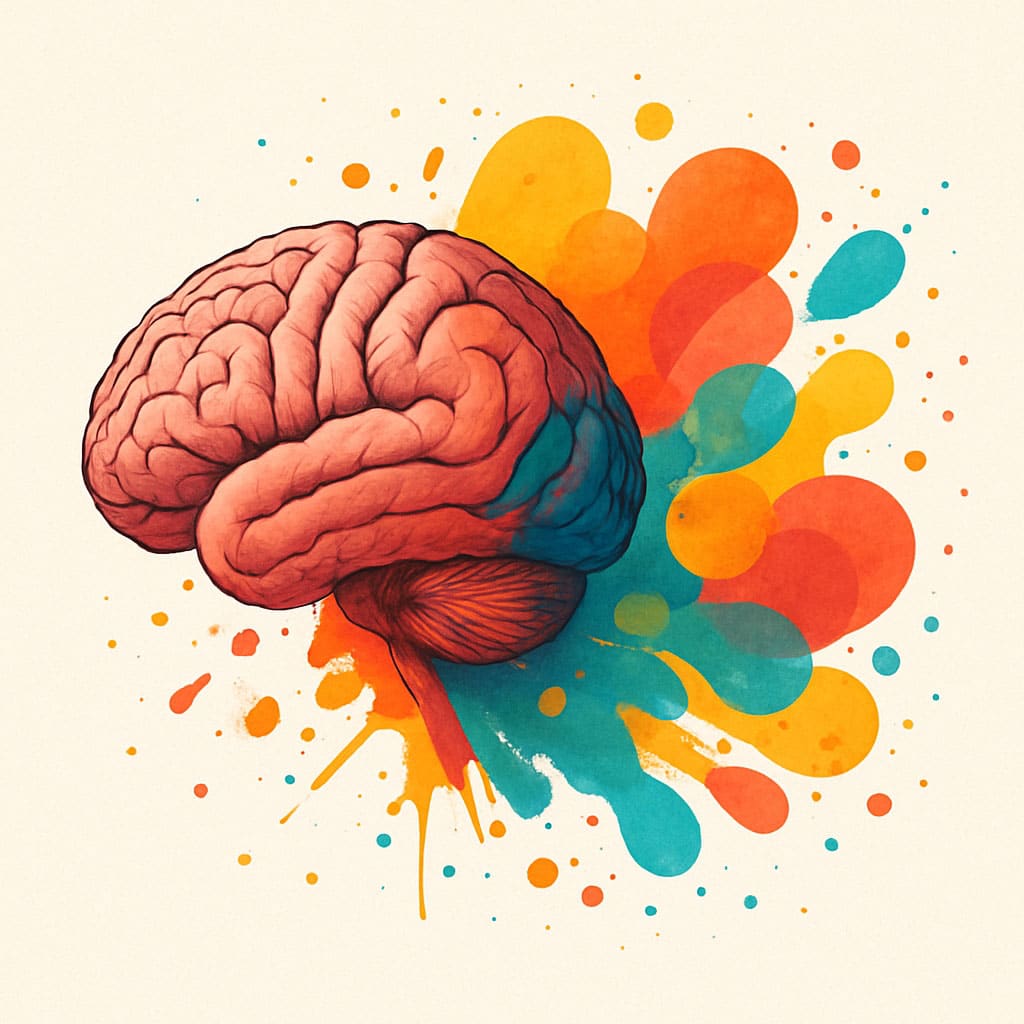
The field of neuroaesthetics, widely referenced throughout Your Brain On Art, examines the intersection of creativity, sensory engagement, and human biology. What we now know is this: the brain lights up in extraordinary ways when we create or experience aesthetics.
When we write an article, compose music, build a narrative, or design an infographic:
- Our reward system activates, releasing dopamine, serotonin, and oxytocin — chemicals that lower stress, boost happiness, and enhance motivation.
- The Default Mode Network (DMN),once dismissed as the mind’s “idle mode,”becomes highly engaged, fueling imagination, meaning-making, empathy, insight, and perspective.
- Neural connectivity increases, forming and strengthening pathways associated with innovation, pattern recognition, and long-term strategic thinking.
This suggests that activities often labeled non-essential may be among the most essential for effective leadership and teamwork. Writing, painting, designing, crafting, and imagining aren’t hobbies; they are neurological training.
They enhance our ability to detect what others overlook. They boost intuition, grow empathy, and develop the mental flexibility needed for decisions where data alone isn’t enough.
A Note on Brainstorming
There’s another dimension of creativity that Your Brain On Art helped crystallize for me. It lives at the heart of how organizations solve problems and generate ideas: brainstorming.
Most companies brainstorm with good intentions. They gather teams in a room, invite ideas, fill sticky notes, and hope lightning strikes. But without creative conditioning and a culture that values imagination, brainstorming often devolves into what I regard as mild precipitation – sprinkles of thought, safe ideas, and familiar pathways.
The problem isn’t with brainstorming; it’s with the environment.
When creativity is treated as a luxury rather than a discipline, people protect themselves rather than explore possibilities. They offer answers they know will be accepted. They avoid risk. They tend to color only inside the lines.
In an era where the ground shifts weekly, mild precipitation won’t cut it.
If CEOs want real insight, they must cultivate conditions where creativity isn’t just occasional but embedded in the culture. It’s about creating an environment where people don’t have to wait for permission to imagine and can freely express their ideas.
A company that practices creativity can learn quickly, pivot confidently, and respond to uncertainty with confidence rather than fear. That is the leadership advantage.
Art Drives Business Outcomes
One of the most important contributions of the book is its demonstration of how arts-based interventions dramatically improve outcomes across fields such as medicine, psychology, and trauma recovery. If creativity can lower cortisol levels in emergency rooms, reduce pain perception among recovering soldiers, and help patients regain language after a stroke, imagine what it could do for today’s organizations.
- Teams under pressure could think more clearly and collaborate more generously.
- Leaders navigating complexity could make decisions with more nuance and less reactivity.
- Organizations could innovatemore freely.
Creativity is not only good for human beings. It’s good for business.
The CEO Mandate: Redefining “Productive Time”
If we take this seriously, then leaders must rethink how they allocate attention and energy. What if creativity isn’t what we do after the work is done, but what makes the work better?
Imagine blocking time for exploration the same way we block time for dashboards and KPIs.
Imagine building cultures that employ art to strengthen problem-solving.
Since the most powerful technology we’ll ever manage is the human brain. Think of art as its operating system.
Summary and Call to Action
We are entering a chapter where emotional intelligence, adaptability, and imagination will define the most successful leaders and their teams. AI will accelerate execution. Technology will scale efficiency. But the one competitive edge AI cannot replicate is the human ability to see possibilities where others see limitations.
Your Brain On Art may prove to be one of the most important leadership books of this decade. Carve out time to read it, then write, paint, design, and create. Not because it’s fun, but because it’s necessary.
Add CEOWORLD magazine as your preferred news source on Google News
Follow CEOWORLD magazine on: Google News, LinkedIn, Twitter, and Facebook.License and Republishing: The views in this article are the author’s own and do not represent CEOWORLD magazine. No part of this material may be copied, shared, or published without the magazine’s prior written permission. For media queries, please contact: info@ceoworld.biz. © CEOWORLD magazine LTD