


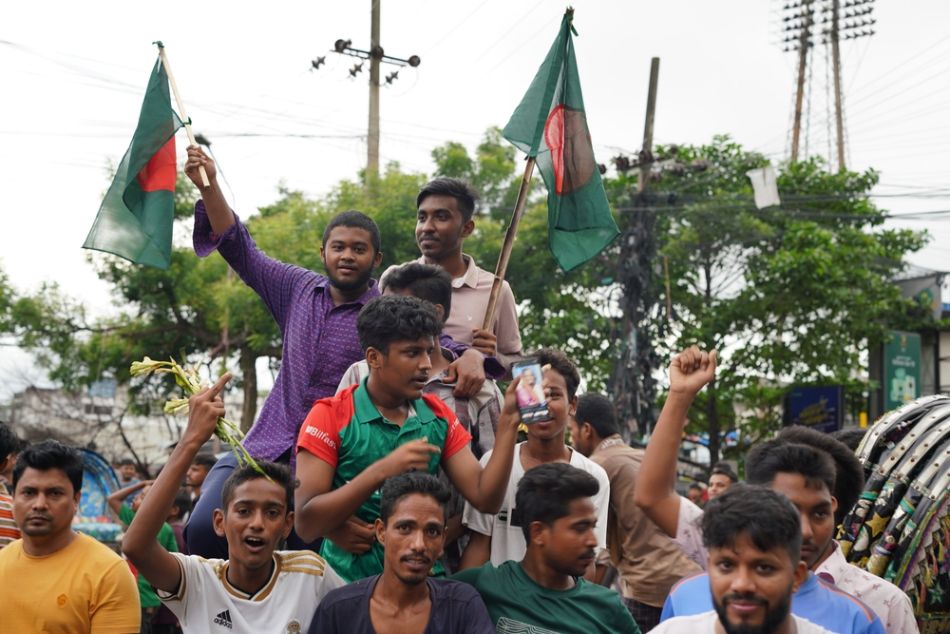
The events that unfolded in Bangladesh in the summer of 2024 offered the world a glimpse of Gen Z in action. What came to be known as the July Revolution was not only a political upheaval that ended Sheikh Hasina’s long rule; it was a moment in which Gen Z stepped forward as a historically conscious, self-directed generation capable of reshaping power itself. Bangladesh was the stage, but the deeper story was generational.
The movement began with a specific grievance: the reinstatement of a public service quota where the system reserved 30% of government jobs for the descendants of the 1971 freedom fighters. Many young Bangladeshis viewed this as fundamentally unjust. For Gen Z students, the ruling is deeply unfair, an erosion of merit-based opportunity.
Students responded with class boycotts and peaceful demonstrations across major universities, including the University of Dhaka. These protests reflected a generational mood rather than a narrow political agenda. Gen Z students were protesting a future they felt was being quietly taken away from them. Their organizing was horizontal and digitally coordinated.
The movement took a decisive turn on July 16 and 17, when armed student groups affiliated with the ruling party, together with police forces, violently suppressed the protests. Yet this proved ineffective. Gen Z is digitally native and adaptable. By the time the Supreme Court reduced the quota allocation on July 21, the movement had already evolved. The core demand was no longer reform, but accountability.
On August 5, tens of thousands of protesters launched the “Long March on Dhaka”, breaking through security barriers and storming the prime minister’s residence. Sheikh Hasina resigned and fled the country. The army announced it would remain neutral while facilitating a transition. Bangladesh entered a power vacuum, raising the urgent question of who should lead next.
Once again, the answer came from the student movement. Leaders from the Students Against Discrimination Movement made it clear they would not accept military rule or a recycled political elite. Instead, they called on Muhammad Yunus, the Nobel Peace Prize–winning economist, to take the advisory role in the interim government.
What followed was that public approval for the interim administration rose sharply as inflation eased, foreign reserves recovered, and long-delayed banking reforms began.
Through these events, Gen Z first stepped onto the world stage through a successful political movement. The Bangladesh uprising was not an anomaly but an early signal. Around the world, major social and political developments are now increasingly intertwined with Gen Z. Understanding this generation has become essential to understanding the present and the future.
Gen Z, generally defined as those born between 1997 and 2012, is no longer merely setting trends; it is rewriting cultural and social rules. They prioritize authenticity over perfection, rejecting overly polished narratives and artificial authority. They are deeply skeptical of hierarchy and prefer flat, decentralized structures in both organizations and movements. They are a generation that questions authority by default.
Compared to lofty celebrities, Gen Z is more drawn to content creators who openly show vulnerability, sharing their failures or mental health struggles. This generation is widely seen as the most socially conscious, integrating ideas of justice, gender equality, and dignity into everyday life; this makes them the so-called “woke generation”.
At the same time, Gen Z sets firm boundaries. They reject hustle culture and the belief that work should consume identity. Concepts such as “quiet quitting” reflect not laziness, but a refusal to accept exploitation as virtue. Paradoxically, Gen Z is also the loneliest generation, retreating from mass, algorithm-driven platforms into smaller, interest-based communities. Their fascination with retro objects, like film cameras, vinyl records, and physical media, indicates their desire for tangibility and historical grounding in an overwhelmingly digital world.
Culturally, Gen Z represents a tension between pragmatism and idealism. They are fluent in advanced technologies, including AI, yet acutely aware of the alienation produced by overdeveloped systems. Their response is not rejection, but repair.
Starting with the student protests in Bangladesh, the door to Gen Z’s influence has already been opened. No one knows exactly where Gen Z will take the world. Yet, they are a decisive generation, a historic generation, and they have already begun to shape a new ideological era.
Have you read?
Why Leadership Communication Fails: The Hidden “Intent Problem.”
Ways Arbor Users Save on Electricity (Without The Utility Switch).
Institutional-Grade Governance: Managing Operational Risk in Alternative Investments.
Scaling Content Delivery and Web Security: Insights from Vinod Thottempudi.
Why Long-Term Client Relationships Outperform Digital Marketing Trends.
Add CEOWORLD magazine as your preferred news source on Google News
Follow CEOWORLD magazine on: Google News, LinkedIn, Twitter, and Facebook.License and Republishing: The views in this article are the author’s own and do not represent CEOWORLD magazine. No part of this material may be copied, shared, or published without the magazine’s prior written permission. For media queries, please contact: info@ceoworld.biz. © CEOWORLD magazine LTD