

What Megacities São Paulo, Ho Chi Minh City, and Cairo Have in Common

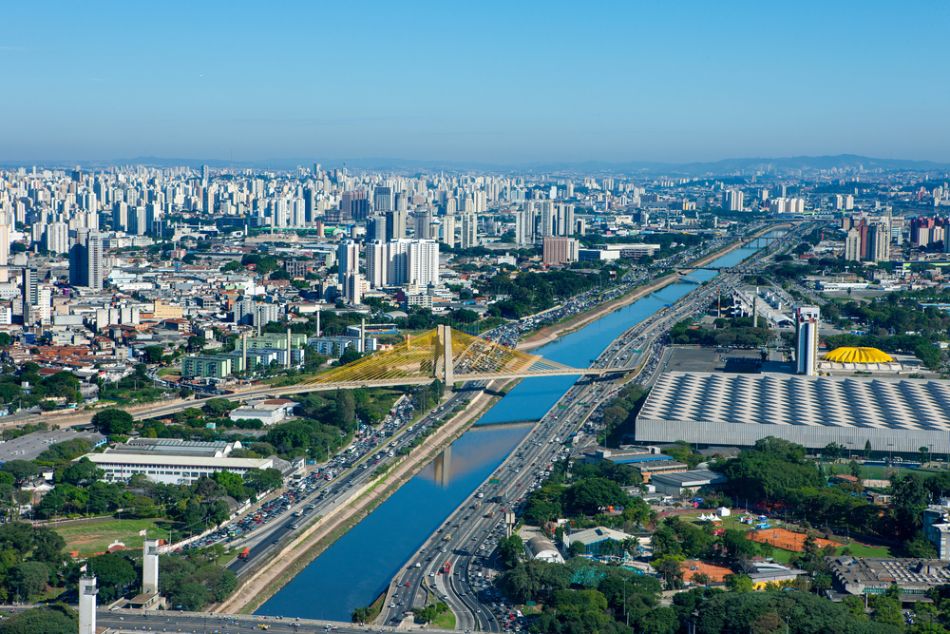
Why three very different cities are emerging as the operating systems of the Global South.
At first glance, São Paulo, Ho Chi Minh City, and Cairo appear to have little in common. They sit on different continents, speak different languages, and are shaped by distinct political and cultural histories. Yet viewed through a strategic lens, these three megacities are converging toward a similar role in the global economy: they are becoming national operating systems and regional power platforms of the Global South. They are not merely large cities. They are where population growth, capital formation, family wealth, political legitimacy, and future ambition intersect. For CEOs, investors, and policymakers, understanding these cities is increasingly synonymous with understanding Brazil, Vietnam, and Egypt themselves.
All three cities function as demographic and economic magnets. Each concentrates population, opportunity, and aspiration at a scale that reshapes national trajectories. São Paulo and Greater Cairo each anchor metropolitan regions of well over twenty million people, while Ho Chi Minh City—smaller in absolute terms—is expanding at a pace that reflects Vietnam’s rapid industrial and urban transition. In each case, internal migration flows tell the same story: if you want upward mobility, you go to the megacity. This scale produces self-contained ecosystems. Labor markets, consumer behavior, media narratives, and political moods are increasingly set at the city level rather than nationally. These megacities behave less like municipalities and more like countries embedded within countries.
Disproportionate economic power.
What truly elevates São Paulo, Ho Chi Minh City, and Cairo into a shared category is their outsized contribution to national GDP and fiscal capacity. São Paulo is Brazil’s undisputed corporate and financial core. Home to Latin America’s most significant capital market infrastructure and a dense concentration of multinational headquarters, it anchors a double-digit share of Brazil’s total economic output. Decisions made in São Paulo ripple across the continent.
Ho Chi Minh City is Vietnam’s economic engine and fiscal workhorse. It contributes an extraordinary share of national GDP and an even larger portion of state budget revenues, effectively subsidizing development elsewhere in the country. In practical terms, Vietnam’s growth story is written first in Ho Chi Minh City. Greater Cairo dominates Egypt’s economic geography to a degree few cities globally can match. Estimates frequently place it at close to half of national economic output. When Cairo slows, Egypt slows. When Cairo grows, Egypt stabilizes. For business leaders, this concentration means risk and opportunity are similarly concentrated. Regulatory shifts, infrastructure bottlenecks, or political unrest in these cities have macro-level consequences.
Declared ambition: from cities to platforms
A defining similarity among these megacities is that none are content with being large. Each seeks to become a platform—financial, logistical, political, or symbolic—through which the nation projects itself outward. Ho Chi Minh City represents the most explicit articulation of this ambition. Vietnam has formally committed to developing an international financial center, positioning the city as a gateway between global capital and Southeast Asian growth. This is a classic “leapfrogging” strategy: compressing decades of financial evolution into a single coordinated push.
São Paulo’s ambition is less codified but no less real. It already functions as Latin America’s de facto financial and corporate hub, supported by deep professional services, entrepreneurial density, and capital markets sophistication. Its challenge is not creation, but modernization—aligning its scale with 21st-century infrastructure, sustainability, and digital governance. Cairo’s ambition is expressed through state-led transformation at scale. Massive urban development projects, including the New Administrative Capital east of Cairo, are designed to relieve congestion while signaling capacity, order, and long-term vision. These projects are as much about political economy and legitimacy as they are about real estate.
Family capital and the HNWI effect
Another underappreciated similarity is the central role of family business and high-net-worth individuals. In all three cities, economic power is not only institutional but intergenerational. Family-owned conglomerates dominate sectors ranging from construction and logistics to retail, manufacturing, and finance. These families anchor wealth locally, reinvest domestically, and maintain close relationships with political decision-makers.
Cairo is a documented African wealth hub, home to thousands of millionaires and a growing cohort of ultra-high-net-worth individuals. São Paulo serves a similar function for Brazil, concentrating financial elites, deal-makers, and corporate dynasties. Ho Chi Minh City is earlier in this cycle, but its rapid wealth creation suggests the rise of a new generation of family offices and regional investors.
For global firms, this matters. Market entry strategies succeed or fail not only on regulatory compliance but on understanding who really allocates capital and influence.
Shared pressures and opportunity. The state-backed bet: infrastructure as destiny
Megacities scale problems as efficiently as they scale growth. Congestion, housing affordability, infrastructure strain, and environmental vulnerability are defining challenges in all three cities. Yet these pressures also create opportunity. Transport systems, climate resilience, fintech for informal economies, smart logistics, and distributed energy solutions are not peripheral markets—they are central to the future viability of these megacities. Innovation here is necessity-driven, fast, and commercially scalable.
Crucially, the rise of São Paulo, Ho Chi Minh City, and Cairo is not accidental; it is being actively underwritten by state and municipal development strategies. São Paulo is in the midst of sustained investment in urban mobility, logistics corridors, and digital infrastructure, aimed at preserving its role as Latin America’s financial and innovation backbone while addressing congestion and productivity losses. Ho Chi Minh City sits at the center of Vietnam’s most ambitious institutional push yet—the creation of an international financial centre—complemented by large-scale transport, port, and urban connectivity projects designed to plug the city more tightly into global value chains. Cairo, meanwhile, represents one of the most assertive examples of state-led urban transformation anywhere in the Global South, with massive investments in transport networks, new urban districts, and the New Administrative Capital intended to decongest the historic core while projecting long-term stability and capacity. Together, these agendas signal a shared reality: these megacities are not just growing—they are being deliberately built as platforms for the next phase of national and regional power.
Where they differ: distinct competitive advantages
Despite these similarities, each city retains a unique edge. São Paulo’s advantage lies in capital-market depth and corporate gravity. No other city in Latin America matches its ability to mobilize domestic capital, structure complex deals, and serve as a regional headquarters hub. Ho Chi Minh City’s advantage is velocity. Few cities globally combine export-driven growth, demographic momentum, and explicit ambition to become a financial node. If regulatory credibility and institutional capacity keep pace, its ascent could be dramatic. Cairo’s advantage is geopolitical centrality. As the cultural and political anchor of the Arab world’s most populous country, Cairo operates at the intersection of Africa, the Middle East, and the Eastern Mediterranean. Its scale and symbolism give it influence that extends beyond pure economics.
The Global South champions: people as power – population gravitas and regional centrality
Taken together, São Paulo, Ho Chi Minh City, and Cairo illustrate a broader shift: the future of the Global South will be city-led. These megacities are already indispensable to their national economies. Increasingly, they will also shape regional trade, finance, and political alignment. For CEOs and global investors, the message is clear. Ignoring these cities means misunderstanding the countries they anchor—and underestimating where the next wave of global growth, influence, and innovation will come from. The Global South’s champions are not only emerging states. They are emerging megacities—and São Paulo, Ho Chi Minh City, and Cairo are already writing that future.
Beyond infrastructure and capital, the true strategic asset of São Paulo, Ho Chi Minh City, and Cairo is their people. Each city commands demographic gravitas at a continental or regional scale, acting as a natural center of gravity for ambition, labor, and ideas far beyond national borders. São Paulo anchors South America’s largest workforce and managerial class; Cairo shapes cultural, educational, and political currents across the Arab world and Africa; Ho Chi Minh City increasingly defines the pace and tone of Southeast Asia’s most dynamic emerging economy (note also ASEAN centrality within the Asian Century). In all three, a deeply ingrained culture of hard work, long hours, and upward mobility has translated population size into economic momentum. These are cities built by intensity—where informality coexists with entrepreneurship, where resilience becomes productivity, and where human effort compounds into national growth. Their rise is not only a function of policy or capital, but of millions of individuals collectively turning demographic scale into economic force.
Written by Radu Magdin.
Have you read?
Modern AML Playbook: Baran Ozkan on Trust Infrastructure and Financial Crime Prevention.
How Jen Eckhardt Helps Professional Services CEOs Build Self-Sustaining Businesses.
Jon DiPietra: Career Insights on Valuation, Trust, and Financial Leadership.
Terra Ziolkowski on Patient Comfort and Experience Innovation in Modern Dentistry.
Kenneth W. Rudzinski: Leadership Built on Clarity, Integrity, and Long-Term Vision.
Add CEOWORLD magazine as your preferred news source on Google News
Follow CEOWORLD magazine on: Google News, LinkedIn, Twitter, and Facebook.License and Republishing: The views in this article are the author’s own and do not represent CEOWORLD magazine. No part of this material may be copied, shared, or published without the magazine’s prior written permission. For media queries, please contact: info@ceoworld.biz. © CEOWORLD magazine LTD