

What CEOs could learn from hardcore negotiation. About leadership, with Fiorella Erni

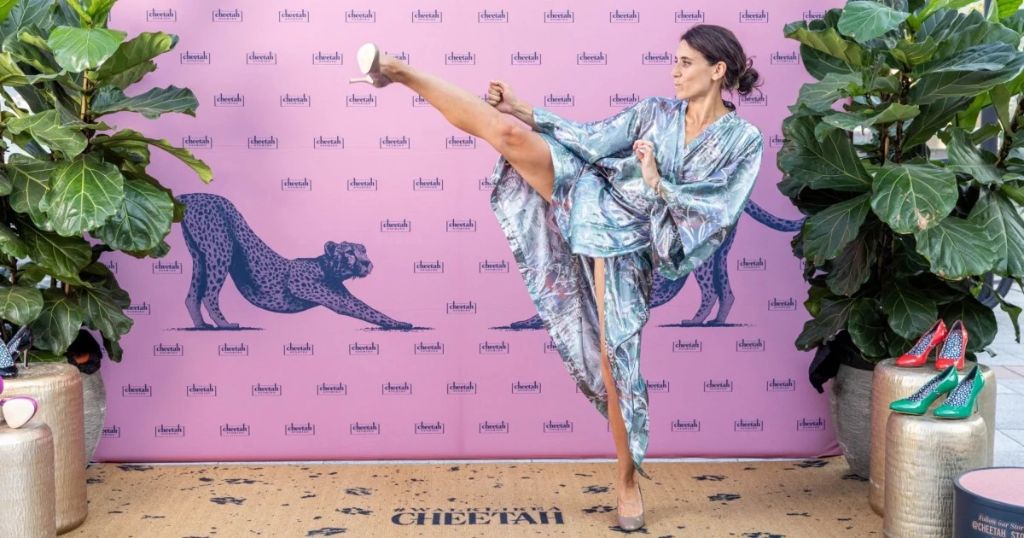
The basics of good negotiations should be an essential part of the training and “war” chest of any CEO or marketing and businessperson out there. Fiorella Erni, co-founder and CEO at Cheetah Stories, a vegan stiletto start-up based in Switzerland and with manufacturing operations in Italy, is also a negotiation rock-star, with solid fieldwork in the most delicate areas of the world.
Understand what’s at stake for the other person; nothing is neutral; empathy without manipulation; peopleof Cheetah Stories, a vegan stiletto start-up based in Switzerland with manufacturing operations in Italy, is also a negotiation rockstar believe what they experience; thinking in arcs and winning streaks; focus on everyone’s interests rather than positions; keep emotions at bay; hard on the issue, soft on the people; ethical leadership; these are some of the gems that come out from this deep interview with Ms. Erni. Total Marketing, the author’s way of describing an inclusive network of employees, stakeholders, and fans, is based on the rejection of extraction, in favor of a spirit and logic of inclusion and distribution of information and rewards.
Ms. Erni’s vision, coming from a negotiation background, is a much better way of explaining why the business of business can negotiate and shape a better future for everyone at the table, making money and doing good at the same time. Cheetah Stories, her latest venture, just started. We wish her the best as she shows the word how to “walk the talk,” even in high heels.
This is our exchange.
From war zones to boardrooms. How has your experience as a frontline humanitarian negotiator shaped the way you approach high-stakes business negotiations today?
My experience as a frontline humanitarian negotiator has taught me to stay calm under pressure and to always start by humanizing the person on the other side of the table. This mindset now anchors how high-stakes business negotiations are prepared, led, and debriefed. In conflict zones, negotiations often involve actors whose values and behaviors may be far from one’s own, yet the outcomes can be literally a matter of life or death. Working in these environments trained me to regulate my own stress, think clearly when the stakes are high, and separate immediate emotion from long-term objectives — skills that transfer directly to tense boardroom situations.
Frontline work also forces you to look beyond positions and understand the human reality behind them: fear, exhaustion, family worries, or a sense of responsibility toward a group. Approaching a soldier at a checkpoint and a CEO across a table follows the same principle: if you can see the pressures and risks that they carry, you can connect, build trust, and design proposals that address both their interests and their emotional state. This focus on “what is at stake for my counterpart” has become a distinctive part of how I negotiate in business.
It means spending time mapping their incentives and constraints, listening for unspoken concerns, and crafting agreements that acknowledge those stakes while still protecting my own side’s objectives. In many commercial settings, parties rush to argue numbers and positions, and this human dimension is often overlooked. What I bring from humanitarian negotiations is the discipline to slow down, see the person behind the role, and use that understanding to navigate even the most adversarial discussions toward constructive, durable agreements.
You founded Cheetah Stories to challenge the fashion industry’s norms. What lessons from your negotiation background have influenced how you lead and grow a purpose-driven brand?
Negotiation has shaped every aspect of how Cheetah Stories is built and led; from the way the brand shows up in a room to how it earns trust over time. The same principles that make a negotiation effective – preparation, presence, and authenticity – also underpin a credible, purpose-driven vegan fashion label. In negotiation, nothing is neutral: preparation, body language, tone of voice, and even what you wear; all send a message before you say a word.
Cheetah Stories was born from this awareness; the brand uses fashion—and yes, high heels—as a deliberate choice to project confidence, clarity, and respect, mirroring the composure expected at any serious negotiation table. A core lesson from negotiation is the power of empathy without manipulation. Being able to read the other side and build rapport quickly only works if it is grounded in genuine curiosity and respect; people sense inauthenticity immediately, and once trust is broken, both deals and brands suffer. This is why authenticity sits at the center of how Cheetah Stories operates as a purpose-led vegan brand.
Leading a vegan label means living those values personally, but in a way that is open rather than dogmatic—acknowledging imperfections, showing one’s face, and speaking honestly about the journey, which is precisely how long-term trust with consumers is built. In both branding and negotiation, “walking the talk” matters more than any statement or campaign. By aligning personal behavior, business decisions, and communication with the brand’s ethical commitments, Cheetah Stories applies negotiation’s most important lesson: people believe what they consistently experience, not what they are told.
Many people see negotiation as confrontational. You speak about courage and compassion. How do you define “good” negotiation?
“Good” negotiation is not about confrontation; it is about having the courage to look beyond the quick win and the compassion to protect the relationship for the next conversation. It aims for strong outcomes today that make future negotiations easier, not harder. People who see negotiation as a fight usually focus on the short term and on using leverage to “win” this round.
Effective negotiators think in arcs: if you push too hard when the power is on your side, you may pay the price in the next deal, when the balance has shifted, and trust is gone. For that reason, “good” negotiation means working towards winwinwin solutions, where each side walks away with something they feel is fair and sustainable. This is not about sacrificing results for clients; it is about designing agreements that start a winning streak: solid on the numbers, and strong enough relationally that people want to work together again.
Courage in negotiation is the willingness to stay open, ask difficult questions, and challenge assumptions rather than hide behind rigid positions. Empathy is the discipline of listening for underlying needs and emotions, so that proposals respond to interests rather than just the stated demands on the surface. When negotiators keep an open mind, focus on interests instead of positions, and genuinely listen to the other side, the tone of the conversation changes. The table becomes a space for problem-solving rather than point-scoring, and that is what defines “good” negotiation: robust results achieved with integrity, respect, and the sense that everyone has been heard.
You’ve worked in some of the world’s most complex environments. What’s one unexpected or counterintuitive insight about human behavior in high-pressure negotiations?
One of the most surprising things about high-pressure negotiations is how often people walk away from deals that are clearly in their favor, simply because their emotions take over. When ego, fear, or jealousy are triggered, rational cost–benefit thinking can collapse in seconds, and people start defending their pride rather than their interests. In intense situations, everyone at the table is already running “hot”, so even small signals can be misread as threats or disrespect.
Once that happens, some people would rather self-sabotage than accept an outcome that feels, emotionally, like a loss—even if, on paper, it is a clear win. There have been negotiations in which the outcome would have been an undeniable victory for the person on whose behalf I was negotiating, yet they torpedoed the agreement at the last moment because something in the process bruised their ego. That experience has taught me that managing emotions—naming them, slowing down, and creating enough psychological safety—is just as crucial as managing numbers or legal terms.
Looking ahead, what role do you believe ethical leadership and negotiation will play in shaping the future of business, fashion, and society at large?
Ethical leadership and principled negotiation will move from being “nice-to-have” ideals to core engines of competitiveness, especially in industries like fashion, where trust, transparency, and impact are under intense scrutiny. The businesses that thrive will be those that prove ethics and profitability reinforce each other rather than compete. For a long time, many leaders have assumed that doing the right thing means sacrificing returns, even though history and data show that fair treatment of workers, customers, and partners can create enormous long-term value.
Ethical leadership shifts the focus away from quick wins toward building resilient relationships and brands that can weather crises because stakeholders believe in how those companies operate. In practice, this kind of leadership is not soft; it is a mix of empathy and clear accountability: “hard on the issue, soft on the person.” It does not mean tolerating weak performance or imposing unrealistic environmental or social standards overnight, but setting credible goals, being transparent about the journey, and consistently moving toward standards that people can be proud of. Negotiation will mirror this shift.
Instead of extracting value at any cost, ethical negotiation will focus on principled, interest-based agreements that reward fair behavior, reduce risk across the supply chain, and create value for a wider circle of stakeholders, from garment workers to investors and end customers. Looking ahead, ethical leadership and negotiation will be understood not as constraints but as strategic tools for building profitable, trusted, and future-proof businesses. In fashion and beyond, leaders who can align profit with purpose will set the standards the rest of society eventually follows.
Add CEOWORLD magazine as your preferred news source on Google News
Follow CEOWORLD magazine on: Google News, LinkedIn, Twitter, and Facebook.License and Republishing: The views in this article are the author’s own and do not represent CEOWORLD magazine. No part of this material may be copied, shared, or published without the magazine’s prior written permission. For media queries, please contact: info@ceoworld.biz. © CEOWORLD magazine LTD