

The CEO’s Other Succession Plan: Applying Leadership Skills at Home to Build a Legacy of Financial Confidence


As leaders, we’re experts at building long-term value. What if our most powerful frameworks could be applied to our most important stakeholders: our families?
As C-suite leaders, we’re driven by strategy. We build frameworks, mitigate risk, and invest in developing our top talent. We know that long-term vision is what separates success from stagnation.
It’s a challenge I’ve been thinking about a lot: do we apply that same strategic rigor to the most important organization we’ll ever lead—our family?
As an executive search partner who works daily with investors and C-suite leaders , I’ve noticed a common gap, even among the most successful professionals. We provide our children with incredible educational opportunities, but are we accidentally leaving a gap in one of the most critical areas: financial literacy?
This isn’t a “soft” skill. It’s a key component of a resilient, empowered, and free life. The good news is that the tools we use in the boardroom are perfectly suited to close this gap at home. It’s an opportunity to bring our CEO-level best practices to our personal lives.
1. From Corporate Mission to Family Core Values
In our businesses, we rely on core values to guide decisions, from M&A to new hires. What if we applied that same framework at home?
Most of us inherit our “money stories” by default. In my own life, my mother’s WWII-era “scarcity mindset” taught me to focus on saving and building security. My husband’s family, by contrast, practiced an “abundance mindset” centered on showing love through money. Both perspectives were incomplete, and both had limitations.
As leaders, we had to do what we do at work: strategically align. We had to define the “core values” of our new family organization.
This approach allows us to move beyond inheriting our financial habits by default. We can sit down and intentionally define our “Family Core Values” for ourselves and our kids. And specifically in relation to our approach to money, is our goal “Security,” “Generosity,” or something else? When your teen asks for a $1,000 phone, this reframes the conversation. It’s no longer a “no” from a parent; it’s a discussion about alignment with the family’s stated goals.
2. A New KPI: Financial Confidence
In our companies, “what gets measured, gets managed.” We track KPIs for everything from revenue growth to employee retention. Perhaps one of the most powerful long-term metrics for our family’s future peace of mind is our children’s financial confidence.
While momentum is building, and 30 states in the U.S. now require a personal finance class (up from just 6 in 2019), that means many students must still learn it at home. This assumes their parents not only know the basics, but also how to teach them.
This isn’t a failure; it’s an opportunity for a new kind of succession planning. It’s a chance for us, as leaders, to step in and be the Chief Education Officer for this one critical subject.
3. Execution: The “Family All-Hands” on Money
Here are three ways we can bring our leadership skills home to build this competency.
A. Teach Resource Allocation (From First Allowance to First Paycheck) The lessons can start the moment a child asks for money, long before their first job.
- The Leadership Skill: Budgeting & Resource Allocation.
- The Home Application: We can frame their allowance not as a handout, but as their first “operating budget.” This is a low-stakes sandbox to learn trade-offs (if they buy the toy, they can’t buy the candy) and to see that resources are finite. As they grow and get their first job, their “revenue” increases. This is the perfect time to introduce a more formal framework, like the 50/30/20 rule (50% Needs, 30% Wants, 20% Savings). This helps them be mindful, prioritize (a new t-shirt now vs. a new bike later), and balance short-term wants with long-term goals. The core lesson, whether for a $5 allowance or a $500 paycheck, is that money is a resource to be allocated, not just spent.
B. Frame Investing as the Ultimate Long-Hold As executives, we understand the magic of compound interest.It’s the engine of all long-term value creation.
- The Leadership Skill: Long-Term Strategic Investment.
- The Home Application: This is one of the most powerful concepts we can teach. Open a retirement account (like a Roth IRA) with them for their first summer job. Show them how a $1,000 investment, made at 16, can become $100,000 by retirement. This isn’t abstract; it’s the most profound asymmetric upside you can offer. It teaches them to understand the trade-off of their time for money and to learn how to start making their money work for them.
c. Treat Their Career as Their Primary Economic Engine Themost important asset you will ever manage is your own human capital. Your earning potential is the engine of your financial life.
- The Leadership Skill: Strategic Planning, Talent Management, & Negotiation.
- The Home Application: As leaders, we can guide them through the most important strategic decisions of their lives. This goes beyond just ‘getting a job.’ We can help them analyze the ‘trade-offs’ of different career paths—like a mission-oriented job versus a high-compensation track—and understand how those choices impact their long-term financial goals. We can then teach them to treat their salary as a negotiation, not a gift. We spend 18 years preparing them for a career, but often zero time teaching them how to research their worth, articulate their value, and professionally ask for what they deserve. That single conversation can be worth millions over a lifetime. Finally, we can instill the CEO mindset: their ‘job’ doesn’t have to be their only revenue stream. We can encourage them to explore ‘side gigs’ or even launch their own small business, teaching them to be creators of value, not just employees.
The Ultimate Legacy
As leaders, we’re driven by a desire to build something that lasts. We want our companies to thrive long after we’re gone. But our most profound legacy isn’t just the market cap we build; it’s the capability and confidence we instill in the next generation.
By applying the same strategic thought, clear communication, and goal-oriented execution to our family’s financial education, we give our children more than an inheritance. We give them the tools for a life of empowerment, enabling them to make choices from a place of freedom, not fear. That, I believe, is the ultimate succession plan.
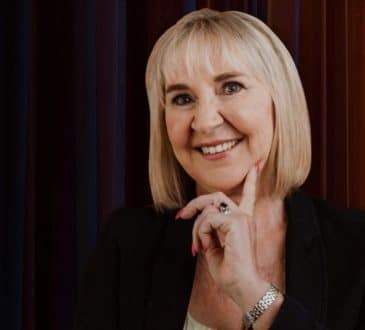
Written by Victoria Lakers Kyle.
Add CEOWORLD magazine as your preferred news source on Google News
Follow CEOWORLD magazine on: Google News, LinkedIn, Twitter, and Facebook.License and Republishing: The views in this article are the author’s own and do not represent CEOWORLD magazine. No part of this material may be copied, shared, or published without the magazine’s prior written permission. For media queries, please contact: info@ceoworld.biz. © CEOWORLD magazine LTD