


An exclusive interview with Vassilis Exarchos, President, National Centre for Public Administration & Local Government (EKDDA)

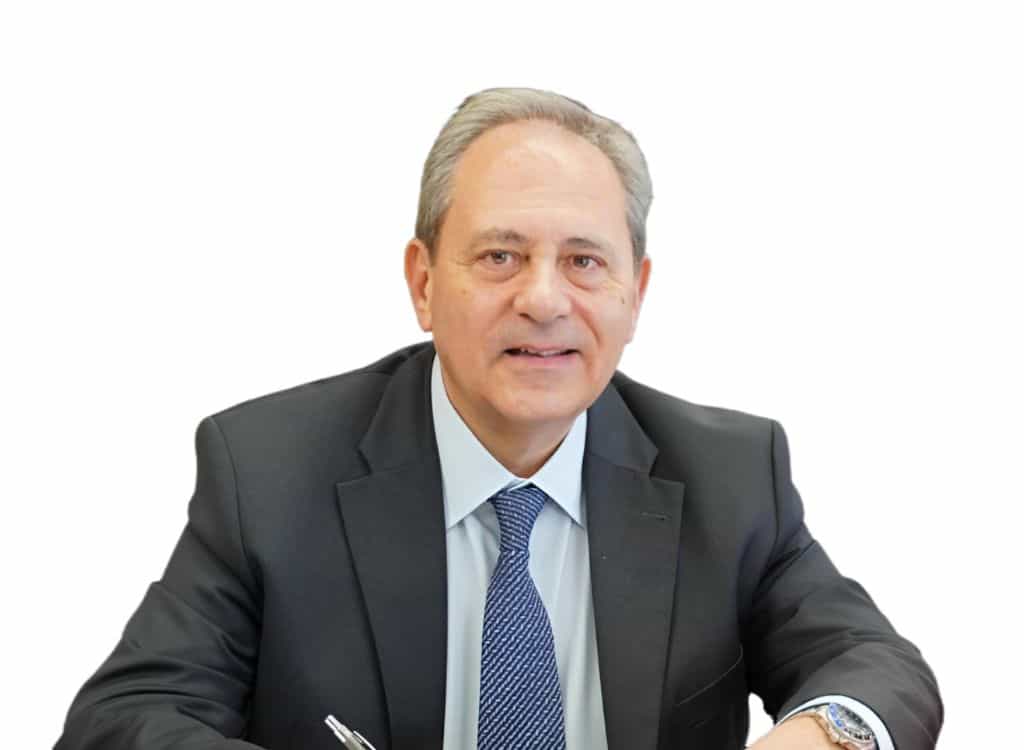
Vassilis Exarchos, President of The National Centre for Public Administration & Local Government (EKDDA), explains the main steps Greece has taken towards digital transformation in the public sector and EKDDA’s crucial role in this progress. In his interview for CEOWORLD magazine, he reveals his vision for EKDDA in the coming years, structured around three strategic pillars.
The President of The National Centre for Public Administration & Local Government (EKDDA) holds two more recognizable positions. He has been elected to the Steering Committee of the European Group for Public Administration (EGPA) and to the Board of Management of the International Association of Schools and Institutes of Administration (IASIA)— starting recently to serve as its Vice-President for Europe.
Vassilis Exarchos, through his leadership, can make the difference and leave his mark on EKDDA’s role and contribution.
Q: When the National Centre for Public Administration and Local Government (EKDDA) was founded, and what is its mission?
Vassilis Exarchos: The National Centre for Public Administration and Local Government (EKDDA), established in 1983, has served as Greece’s national institution for the training and skills’ development of civil servants. Its mission is to continuously enhance the knowledge, competencies, and professionalism of civil servants and to contribute to a state that is more effective, modern, and responsive to citizens’ needs. At the same time, EKDDA invests in the production of evidence-informed knowledge and the transfer of European and international best practices that support the broader transformation of public governance.
Its strategic ambition is to function as a catalyst for administrative modernisation and to strengthen the quality of public policies. Through targeted training, applied research, and close cooperation with universities and public organizations both in Greece and worldwide, EKDDA helps shape an administration capable of addressing the complex social and economic challenges of our time.
Within this framework, EKDDA maintains strong partnerships with leading Greek universities such as the National and Kapodistrian University of Athens and Panteion University as well as with major universities abroad like LSE and INSEAD. These collaborations—ranging from joint research projects to co-designed educational initiatives—help bridge public administration with contemporary academic expertise, thereby supporting a robust learning ecosystem for civil servants.
Q: Greece is advancing its digital transformation in Public Administration. What are the key observations regarding this transition so far?
Vassilis Exarchos: In recent years, Greece has taken major steps forward in digital transformation, with gov.gr standing as a flagship example by consolidating thousands of services within a single digital portal. At the same time, important reforms have advanced interoperability across information systems, the deployment of artificial intelligence, the development of cloud infrastructures, and the upskilling of the public-sector workforce.
This transition, however, presents several challenges. Greece must further deepen interoperability, bolster system resilience, strengthen the systematic evaluation of reforms, and safeguard digital inclusion by ensuring that no citizen is excluded due to limited digital skills. The results are encouraging and remain highly positive: public administration has developed a clear strategic direction and a steady pace of digital implementation.
EKDDA plays an active role in this progress by strengthening digital skills through modern training programs. Notable examples include the “AI for All” initiative on artificial intelligence, delivered in cooperation with Google, as well as specialized digital-skills programs on cloud technologies implemented with Microsoft. Through these initiatives, EKDDA supports the creation of a public administration that can effectively leverage emerging technologies for the benefit of citizens.
The National School of Public Administration and Local Government also plays a crucial role, as it is currently developing a new curriculum centred on innovation, leadership, and the digital technologies that will shape the administration of the future.
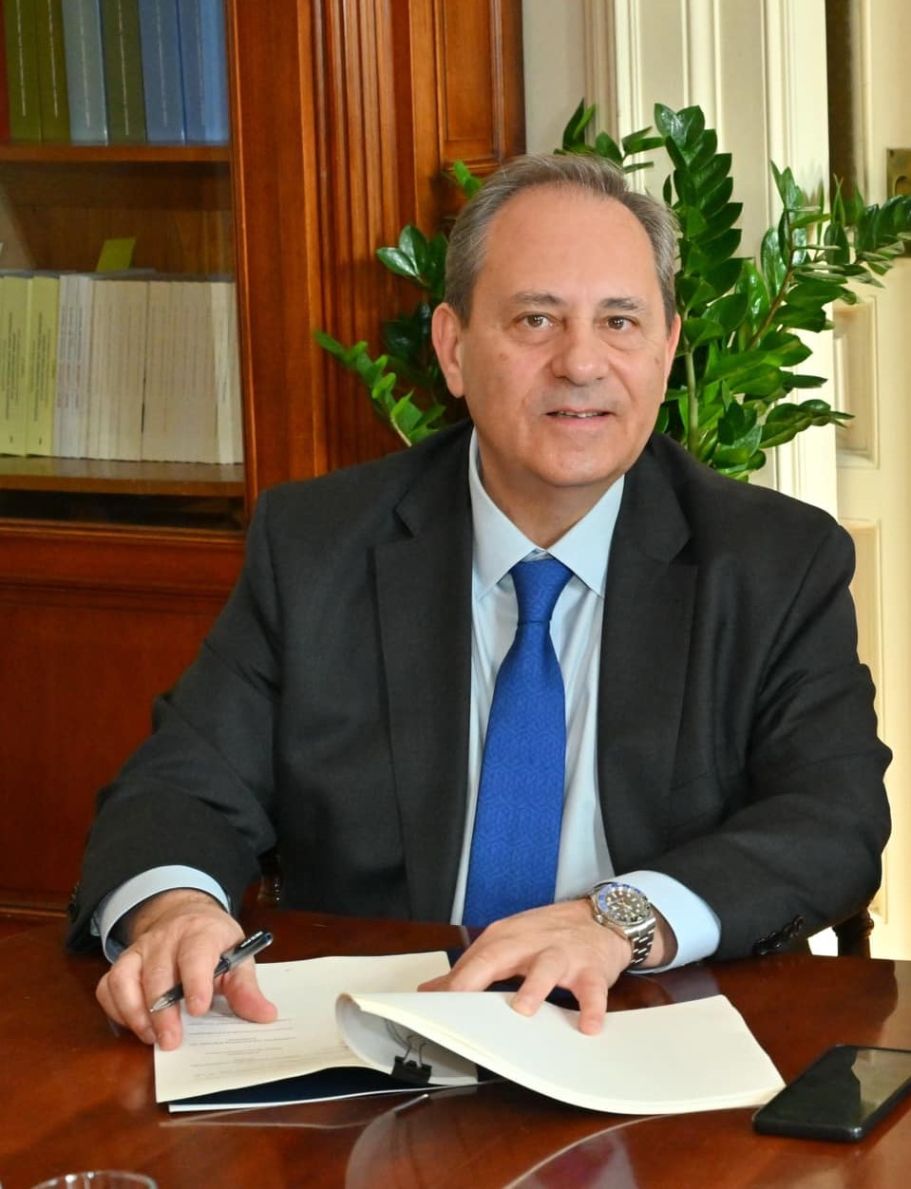
Q: You were recently appointed as President of EKDDA. What is your vision for EKDDA in the coming years?
Vassilis Exarchos: My vision for EKDDA is structured around three strategic pillars.
First, international outreach and connectivity. We aim to position EKDDA as a genuine hub of knowledge exchange and innovation with an active presence in global networks.
It was therefore an honor for me to be elected to the Steering Committee of the European Group for Public Administration (EGPA) and to the Board of Management of the International Association of Schools and Institutes of Administration (IASIA)—and recently to start serving as its Vice-President for Europe.
These networks are among the most influential in the field of public administration, and our involvement strengthens both EKDDA’s profile and Greece’s position in international dialogue. It also opens pathways for deeper cooperation with leading global institutions.
Second, digital and innovation in training methods and tools. We seek to modernize the way public servants learn and develop. This includes investing in contemporary training tools, new blended-learning methodologies, and educational programs that prepare the workforce of public administration for the next decade’s challenges. Our approach integrates thematic workshops, policy-design laboratories, and conferences aimed at driving systematic improvements in public services.
Third, a public administration that focuses on an anthropocentric approach for the civil servant. Human capital is the state’s most valuable asset. For this reason, we place strong emphasis on training initiatives aligned with national strategies and with the framework introduced by Law 4940/2022 on target-setting, performance evaluation, and skills development. We also contribute to the training required for the new Human Resource Management System (HRMS), which will digitise HR processes across the entire public sector for the first time.
A major initiative now underway is the large-scale upskilling training program for 40,000 municipal employees, implemented in cooperation with the Central Union of Municipalities of Greece (KEDE). This program aims to enhance the digital, administrative, and operational competencies of local-government personnel, ultimately improving the day-to-day service experience of citizens.
Overall, this vision is not abstract. It is firmly grounded in EKDDA’s mission: to empower public-sector personnel, to support evidence-informed policy making, and to act as a driver of innovation throughout the administrative system. By combining modern learning tools with international expertise, our goal is to cultivate a new generation of leaders who will guide the transformation of the Greek state with responsibility, transparency, and a strong commitment to public value.
Q: Could you outline EKDDA’s international collaborations and the added value that emerges from them?
Vassilis Exarchos: EKDDA maintains an active network of partnerships with major European and international institutions in the field of public administration. It participates in EGPA and IASIA as mentioned above, the European Institute of Public Administration (EIPA), the Directors of Schools of Public Administration network (DISPA) of EU Member States, and key OECD networks such as the National School of Governance (NSG). It also sustains stable bilateral cooperation with schools and institutes of public administration in France, Portugal, Italy, Spain, and several Western Balkan countries.
The feedback gained through these partnerships is invaluable. It enables EKDDA to incorporate innovative training methods and tools for adult learning, advanced policy tools, and tested international practices into its trainings. In practice, these synergies act as a strategic mechanism that supports the professionalization of the civil service, strengthens the human capital in public administration, and facilitates the diffusion of innovation across the administrative system.
Q: What, do you believe, the Greek public administration of the future will look like?
Vassilis Exarchos: The Greek public administration of the future will be more digital, more agile, and more citizen-centred. Data-driven decision-making, artificial intelligence, automated workflows, and digital service platforms will define a new operational landscape. Nevertheless, the human-centered dimension—leadership, empathy, collaboration, and the capacity to address complex problems—will remain indispensable.
EKDDA’s Institute of Training has already played a transformative role by meeting key targets under the Recovery and Resilience Fund, having trained more than 250,000 civil servants by March 2026. This achievement confirms EKDDA’s central contribution to the development of a modern training ecosystem for public-sector executives.
Looking ahead, I believe public administration will be more participatory, more transparent, and more open to international knowledge. It will be grounded in quality, accountability, and continuous improvement, ensuring that it can respond effectively to societal needs.
Within this evolving environment, EKDDA’s role is fundamental: to prepare civil servants with the technical skills, administrative competency, and strong sense of public value required to serve the public interest. In essence, EKDDA supports the development of an administration that leverages technology, invests in people, and keeps the citizen at its heart and mind.
Add CEOWORLD magazine as your preferred news source on Google News
Follow CEOWORLD magazine on: Google News, LinkedIn, Twitter, and Facebook.License and Republishing: The views in this article are the author’s own and do not represent CEOWORLD magazine. No part of this material may be copied, shared, or published without the magazine’s prior written permission. For media queries, please contact: info@ceoworld.biz. © CEOWORLD magazine LTD