

Bakhyt Ospanov: The CEO Building Kazakhstan’s Education Future

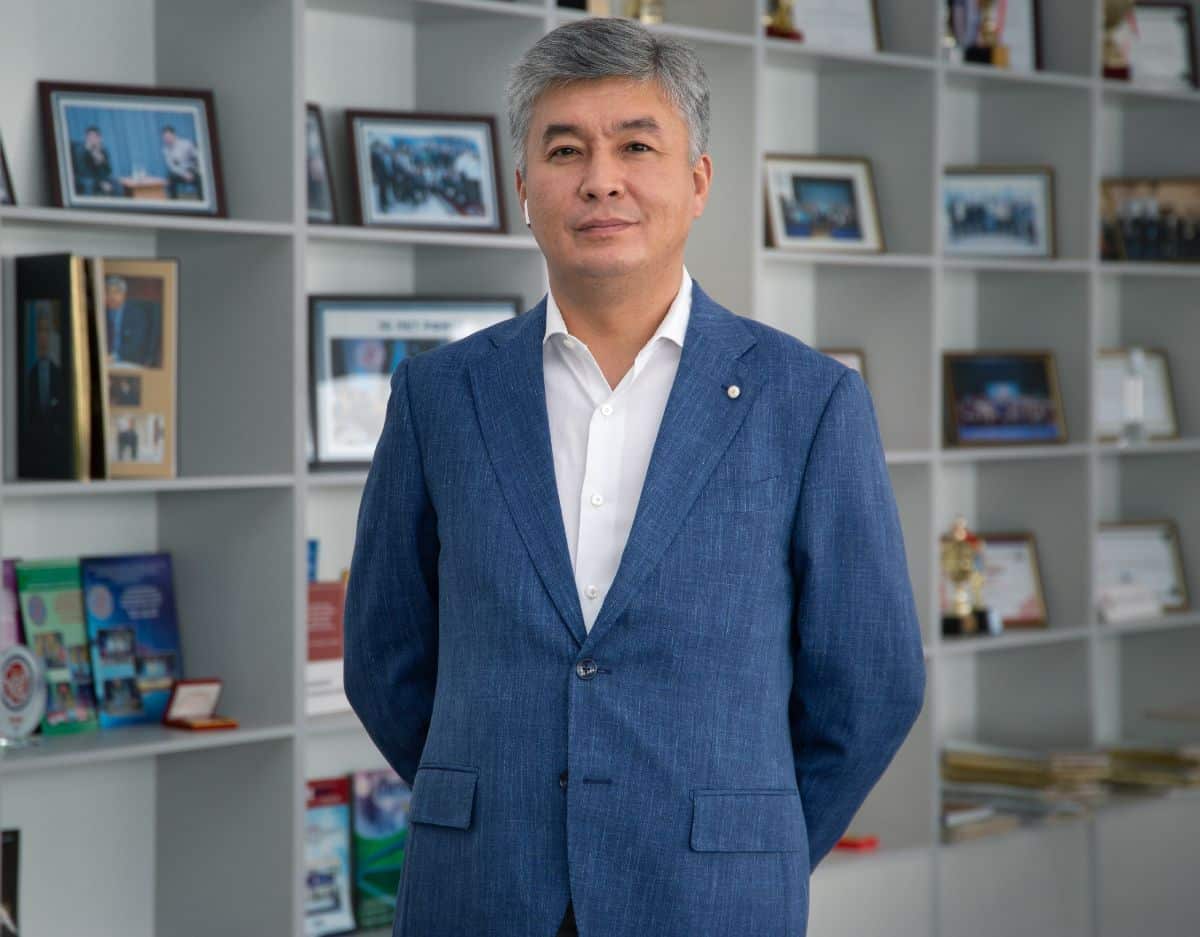
How one leader is turning schools into sustainable institutions through vision, governance, and innovation.
In a world where education increasingly defines national competitiveness, Kazakhstan is building a new model of academic leadership. At the heart of this transformation stands Bakhyt Ospanov — a reform-minded CEO whose work bridges public policy, private enterprise, and global partnerships. By combining governance reform, financial innovation, and international collaboration, he is redefining how schools in Central Asia are managed and sustained.
A Multidisciplinary Foundation
Bakhyt Ospanov’s journey connects three worlds — education, law, and international development. He earned his bachelor’s degree as a teacher of English from the Kazakh State University of World Languages (KazGUMYa), later graduated from the Higher School of Law “Adilet”, and completed a Master’s in International Development at Duke University in the U.S.
This blend of humanities, legal literacy, and global policy has made him a rare leader fluent in multiple disciplines — capable of speaking the language of education, government, and business simultaneously.
“Education must become financially independent — that’s the foundation of sustainability,” says Ospanov.
Launching Kazakhstan’s First STEM School
As CEO of Quantum Management Company, Ospanov turned a vision into reality by founding the country’s first private STEM-focused school — Quantum STEM School.
He led every stage: from developing the concept and brand to architectural design and construction.
He personally designed the curriculum, oversaw competitive teacher recruitment, and built an admissions system based on merit.
Only 10 percent of applicants were accepted annually, making Quantum a symbol of academic excellence and rigor. To finance the project, Ospanov secured a bank loan from RBK Bank and state subsidies under the “Economy of Simple Things” program.
This public-private approach became a template for educational innovation in Kazakhstan’s emerging private sector.
Reforming a National Institution
Before Quantum, Ospanov had already made his mark as a member of the Board of Directors at the National School of Physics and Mathematics (RPhMS) — Kazakhstan’s most prestigious public school.
He initiated and helped draft two Government Decrees that transformed the institution’s management model.
The first reorganized RPhMS from a state entity into a non-profit joint-stock company, introducing corporate governance and board accountability.
The second placed it under the Law on Autonomous Educational Organizations, granting academic and financial autonomy.
Under his leadership, RPhMS opened a new campus in Astana and expanded its student body from 800 to 2 500. These reforms turned the school into a benchmark for modern education governance across Kazakhstan.
“Strong governance is as vital for a school as it is for a corporation,” notes Ospanov.
Pioneering Endowment Funding
Believing that great education requires financial resilience, Ospanov founded and managed the Fizmat Endowment Fund — the first school-level endowment in Kazakhstan.
He structured its legal framework, organized independent management, and raised over $4.5 million in donations from alumni and corporate partners.
The fund invests its principal in financial markets, using returns to support teachers, equip labs, and finance students’ projects. This model replaced year-to-year parental fees with a transparent, long-term mechanism for growth. Today, more than 20 Kazakh educational institutions have replicated this approach — a movement sparked by Ospanov’s vision.
Expanding Global Access
In 2025, Bakhyt Ospanov took his mission international by helping establish the Berik & Bayan Kaniyev Scholarship at Duke University — the first Duke scholarship for Kazakhstan and the entire post-Soviet region.
He led negotiations with Duke’s Fuqua School of Business, its dean and legal team, and the donor family, defining the program’s format and permanent endowment structure.
The scholarship covers full tuition for Kazakh students each year and stands as a symbol of how strategic partnerships can connect emerging markets to world-class education.
Legacy and Vision
Across his roles — as CEO, reformer, and founder — Bakhyt Ospanov has proved that effective leadership in education is about designing systems, not just managing institutions.
He builds models that outlast their founders and create pathways for future leaders. Under his influence, Kazakhstan is moving toward a new paradigm — schools that are autonomous, financially self-sufficient, and globally connected.
Leadership Lessons from Bakhyt Ospanov
- Think systemically. Transform education through governance and structure, not just content.
- Build financial independence. Sustainable education requires long-term funding mechanisms.
- Lead with purpose. Every institution should serve a mission larger than itself.
- Unite law and leadership. Policy and vision must reinforce each other to create impact.
- Invest in future leaders. The best CEOs build systems that empower the next generation.
Bakhyt Ospanov is not only reshaping Kazakhstan’s education system — he’s proving that the most visionary CEOs today are those who build knowledge infrastructure, not just companies.
Add CEOWORLD magazine as your preferred news source on Google News
Follow CEOWORLD magazine on: Google News, LinkedIn, Twitter, and Facebook.License and Republishing: The views in this article are the author’s own and do not represent CEOWORLD magazine. No part of this material may be copied, shared, or published without the magazine’s prior written permission. For media queries, please contact: info@ceoworld.biz. © CEOWORLD magazine LTD