


Offshore Caribbean Tax Havens: Where the World’s Wealth Goes to Optimize Tax and Asset Protection

What Makes a Caribbean Tax Haven Attractive?
In practice, a tax haven is a jurisdiction that combines very low or zero direct taxes with investor-friendly regulation and strong financial privacy, with the explicit goal of attracting foreign individuals and corporations. Many Caribbean nations fit this profile by offering little or no personal income tax, capital gains tax, inheritance tax, or withholding tax on offshore income.
For HNWIs, family offices, and international businesses, these islands are less about secrecy and more about predictable, rules-based tax neutrality anchored in common law, stable currencies, and increasingly robust regulatory compliance with global standards.
Why the Caribbean Dominates Offshore Wealth Planning
The Caribbean’s appeal rests on three pillars: tax efficiency, political stability, and legal infrastructure. Many of these jurisdictions peg their currencies to the US dollar or maintain conservative fiscal policies, which reduces currency risk for dollarized portfolios.
At the same time, several islands now pair tax advantages with residency or citizenship-by-investment (CBI) programs, giving investors not just tax optimization but also mobility, diversification, and a second or alternative domicile.
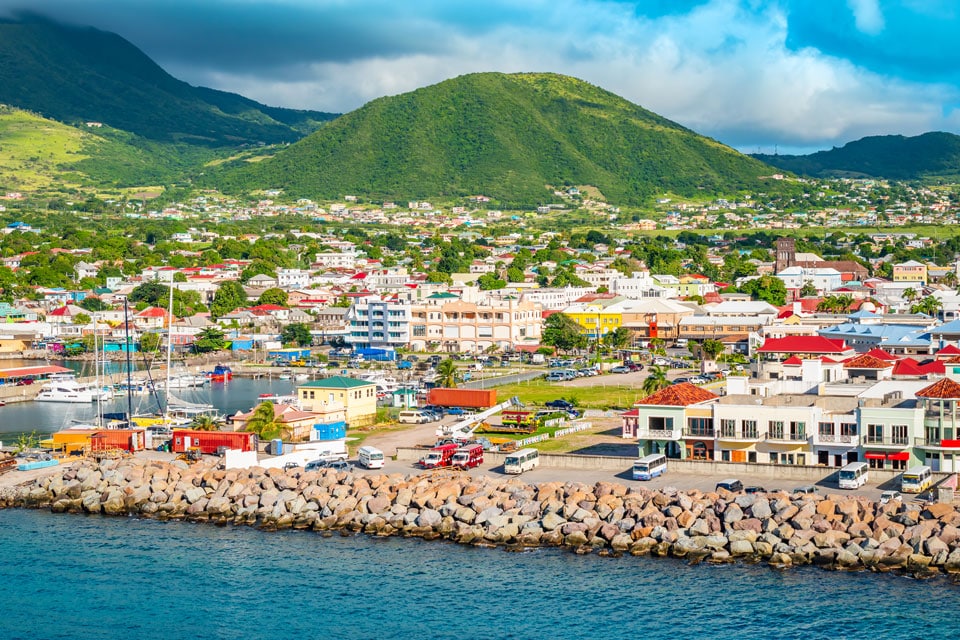
1. Saint Kitts and Nevis: Flagship Citizenship and Zero Income Tax
Saint Kitts and Nevis is one of the oldest and most respected citizenship-by-investment programs in the world, operating since 1984 and widely used by global investors seeking tax-efficient citizenship. The federation imposes no personal income tax, no capital gains tax on individuals, and no inheritance or wealth tax, making it structurally attractive for asset protection and estate planning.

Through the CBI program, investors can obtain citizenship in a matter of months via either a contribution starting from around USD 250,000 to a government fund or by purchasing government-approved real estate from roughly USD 325,000, subject to holding periods. This combination of tax neutrality, visa-free travel, and a tested legal framework makes Saint Kitts and Nevis a cornerstone jurisdiction in many multi-flag strategies.
2. Antigua and Barbuda: No Personal Tax, But Real Corporate Rules
Antigua and Barbuda blends zero personal income, capital gains, and inheritance taxes with a more traditional corporate tax regime, which can be useful for investors who want a defensible structure aligned with OECD expectations. Corporate income is generally taxed at a flat rate of 25–35 percent, depending on sector and specific incentives, although certain industries such as banking, insurance, and telecoms can access reduced effective rates.

Tax residents—typically defined as spending more than 183 days per year in the country—do not pay tax on personal income, capital gains, or wealth, and many investors access this status via the Antigua and Barbuda citizenship-by-investment program, with minimum investment levels in the low- to mid–six figures through real estate or contribution routes.
3. Panama: Territorial Tax System and Offshore-Friendly Infrastructure
Although geographically Central American rather than Caribbean, Panama is typically grouped with Caribbean tax havens due to its territorial tax system and offshore-centric financial ecosystem. Panama taxes only Panama-sourced income, meaning foreign income earned by individuals or companies outside its borders is not subject to local income or corporate tax.
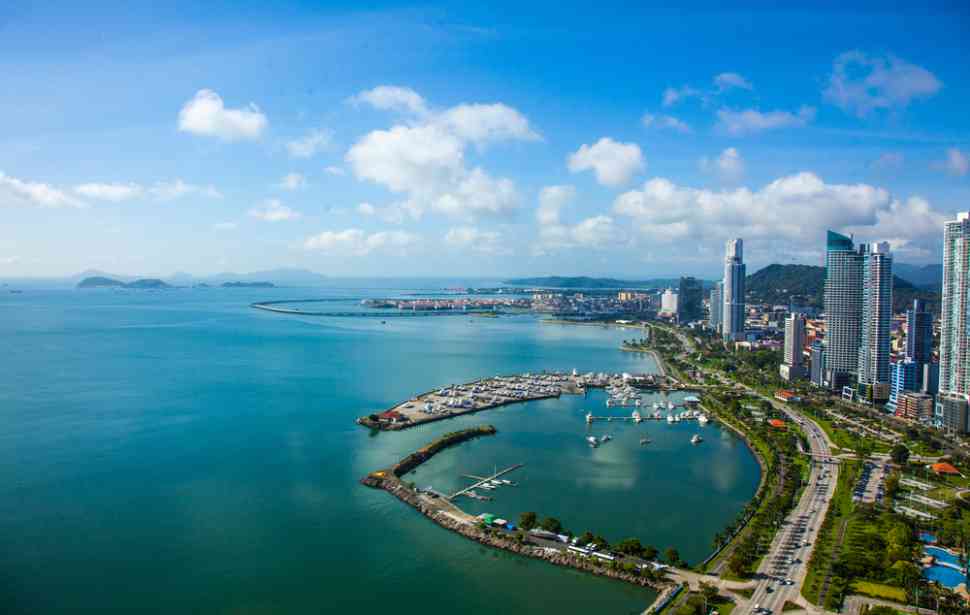
Personal tax rates on local income are modest and progressive, and the standard corporate tax rate of about 25 percent applies only to Panama-sourced net profits, while foreign profits remain exempt. Panama also offers residency-by-investment, including real estate investment routes in the USD 300,000+ range, making it a hybrid solution for those who want both residency and access to a major logistics and banking hub.
4. British Virgin Islands: Tax-Neutral Corporate Engine
The British Virgin Islands (BVI) is one of the world’s best-known jurisdictions for international business companies, often used as holding structures in cross-border deals and fund vehicles. The BVI applies no corporate income tax, no capital gains tax on companies, no withholding tax on dividends or interest, and no personal income tax on offshore earnings, effectively operating as a tax-neutral platform for non–BVI-sourced income.
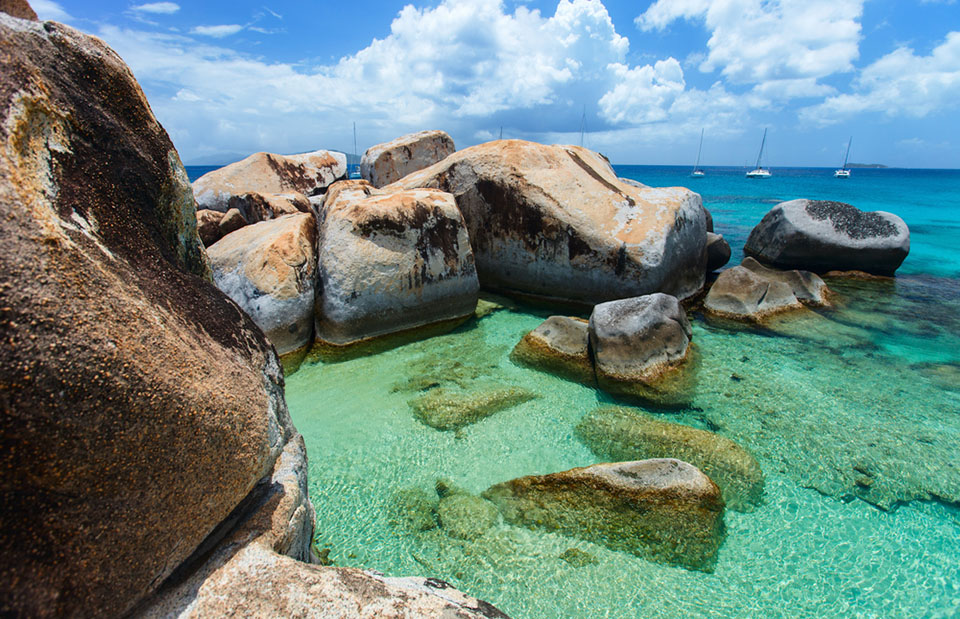
The government instead earns revenue primarily through annual company fees and modest indirect taxes, while payroll tax applies locally for employers and employees. Property and stamp duties exist on local real estate, but for most international structures that do not hold domestic assets, the jurisdiction remains one of the purest corporate tax havens globally.
5. Dominica: Competitive Taxes plus Longstanding Citizenship-by-Investment
Dominica is not fully tax-neutral but is still highly competitive due to the absence of capital gains, inheritance, wealth, and gift taxes, combined with relatively modest income tax rates. Residents are taxed on worldwide income under a progressive system, while non-residents are taxed only on Dominica-sourced income, with individuals often benefiting from allowances and exemptions on specific categories such as real estate sales.
The island is widely recognized for its Dominica Citizenship by Investment Program, one of the most established and cost-effective in the Caribbean, offering citizenship via a government fund contribution or approved real estate investment at comparatively lower minimums than many peers. This makes Dominica a strategic choice for investors who want a respected second passport plus a reasonable, transparent tax framework.
6. Cayman Islands: Pure Zero-Tax Jurisdiction and Financial Hub
The Cayman Islands is often viewed as the archetypal Caribbean tax haven, functioning as a global financial center with no direct taxes on individuals or corporations. There is no personal income tax, no corporate tax, no capital gains tax, no inheritance or estate tax, no payroll tax, and no annual property tax, with government revenue primarily generated through fees, import duties, and stamp duties.
Cayman is a preferred domicile for hedge funds, private equity funds, structured finance vehicles, and captive insurance companies, supported by sophisticated regulation and a 25‑year tax stability guarantee for certain structures. For HNWIs, various residency options tied to real estate or business investment provide long-term residence in one of the most developed and internationally integrated offshore centers.
7. Anguilla: Tax Residency and Ultra-Low Direct Taxation
Anguilla offers a nearly zero-tax environment, with no personal income tax, no corporate income tax for most international structures, and no capital gains or inheritance tax. The territory has positioned itself as a compliant but low-tax hub, particularly attractive for individuals seeking a recognized tax domicile under clear rules.
Through Anguilla’s Tax Residency Program, qualifying applicants can obtain tax residence by meeting property investment thresholds—often around USD 400,000—and committing to a fixed annual tax payment in lieu of traditional income tax, creating a predictable, lump‑sum style regime for affluent individuals.
8. The Bahamas: Lifestyle Destination with No Direct Income Tax
The Bahamas combines no personal income tax, no corporate income tax on most structures, no capital gains tax, and no inheritance or wealth tax with a highly developed lifestyle ecosystem close to the United States. The government relies on VAT, customs duties, property taxes, and business license fees rather than direct taxation of income or capital, which allows international investors to structure holdings with minimal recurring tax leakage.
For residency, the Bahamas offers economic permanent residence via real estate investment in the mid–six figures and other tailored routes for significant spenders, making it particularly attractive for North American and European HNWIs seeking proximity and English-speaking services. While global minimum tax reforms will increasingly affect very large multinationals, many private investors and smaller structures remain lightly impacted.
9. Belize: Offshore Companies, Banking, and Confidentiality
Belize has built a reputation as a tax-neutral jurisdiction for offshore companies and trusts, especially for structures holding foreign assets and income. Companies and trusts formed under Belize’s international business legislation are exempt from local taxes on foreign-earned income, and relevant stamp duties generally do not apply to these entities.
Offshore bank accounts in Belize usually incur no local tax on interest, capital gains, or repatriated profits, and the legal framework allows for nominee directors and shareholders, alongside strict confidentiality that can only be pierced under court order in connection with serious criminal matters. For international clients, Belize combines English common law, relatively low costs, and straightforward incorporation procedures.
10. Barbados: Low-Tax, Treaty-Rich Offshore Platform
Barbados is not a classic “zero-tax” jurisdiction but rather a low-tax, treaty-based offshore center aligned with international standards. Corporate tax rates for many international entities range from roughly 0 to 5.5 percent, with rates decreasing as profits increase, and there is no capital gains tax for many offshore scenarios.

What sets Barbados apart is its extensive network of double taxation agreements, including treaties with Canada, the United States, and European countries, which is particularly useful for multinationals and structured cross-border investments that need treaty benefits. Coupled with exemptions on import duties for business equipment and flexible corporate structures, Barbados positions itself as a “white-listed” alternative within Caribbean tax planning.
Caribbean Tax Havens for HNWIs, Family Offices, and Global Entrepreneurs
| Jurisdiction / Category | Key Metric (Indicative) | Strategic Insight for Investors |
|---|---|---|
| Saint Kitts & Nevis | Personal income tax: 0% on foreign income | Attractive for HNWIs seeking tax-free personal income and a long-standing CBI program. |
| Saint Kitts & Nevis | CBI minimum contribution: ~USD 250,000 | Lower entry point for full citizenship and global mobility. |
| Saint Kitts & Nevis | CBI real estate: ~USD 325,000+ | Suits investors wanting both a passport and hard assets. |
| Antigua & Barbuda | Personal income tax on residents: 0% on many offshore sources | Residence status can significantly reduce global tax burden for well-planned structures. |
| Antigua & Barbuda | Corporate tax: generally up to 25–35% on local-source income | More traditional corporate tax helps with substance and reputational robustness. |
| Antigua & Barbuda | CBI minimum investment: low- to mid–USD 200,000 range | Competitive citizenship alternative to Saint Kitts for families. |
| Panama | Tax basis: territorial; foreign income untaxed | Ideal for entrepreneurs with global income streams outside Panama. |
| Panama | Standard corporate tax: ~25% on Panama-sourced profits | Corporate tax applies only where real local revenue exists. |
| Panama | Residency by investment: real estate from about USD 300,000 | Accessible residency paired with a logistics and financial hub. |
| British Virgin Islands | Corporate income tax on offshore companies: 0% | Popular for holding companies, funds, and SPVs. |
| British Virgin Islands | Personal income tax on non-local income: effectively 0% | Suits principals who are not tax-resident elsewhere. |
| British Virgin Islands | Company annual government fee: ~USD 550–1,350 | Predictable cost base for long-term structures. |
| Dominica | Personal capital gains, inheritance, wealth tax: 0% | Attractive for intergenerational estate planning. |
| Dominica | Corporate tax on resident companies: about 25% | Mixed model combining normal corporate taxation with personal tax efficiencies. |
| Dominica | CBI program: contribution or real estate options | One of the most affordable, well-known second passport routes. |
| Cayman Islands | Corporate tax rate: 0% on most income | Preferred for funds, PE vehicles, and complex financing. |
| Cayman Islands | Personal income, capital gains, inheritance tax: 0% | Enables long-term wealth accumulation free of local direct tax. |
| Cayman Islands | Residency options: various investment-based permits | Supports substance for managers and principals. |
| Anguilla | Personal and corporate income tax: 0% on most structures | Minimal direct taxation for individuals and companies. |
| Anguilla | Tax Residency Program: property from ~USD 400,000 plus fixed annual tax | Structured lump-sum style regime for predictable obligations. |
| The Bahamas | Personal income, capital gains, inheritance tax: 0% | Longstanding choice for US- and EU-adjacent wealth. |
| The Bahamas | Primary revenue: VAT, import duties, property tax | Direct income remains untaxed locally for many investors. |
| The Bahamas | Permanent residence: property investment from around USD 500,000 | Efficient route to residency in a lifestyle-led jurisdiction. |
| Belize | Tax on offshore company foreign income: 0% | Effective tax neutrality for international structures. |
| Belize | Bank interest on offshore accounts: typically tax-free locally | Supports cash and securities holding strategies. |
| Belize | Confidentiality: disclosure usually only by court order for serious cases | Adds privacy, while increasingly aligned with AML standards. |
| Barbados | Corporate tax for many offshore companies: ~0–5.5% | Low-tax alternative with strong treaty network. |
| Barbados | Capital gains tax for many offshore entities: often 0% | Helpful for structuring exits and asset sales. |
| Barbados | Double Tax Treaties: includes US and Canada | Critical advantage for corporates needing treaty benefits. |
For executives, the strategic question is less “Which Caribbean island has the lowest rate?” and more “Which jurisdiction best aligns with my residency, regulatory, and reputational constraints across multiple tax systems.” Thoughtful structuring across several of these centers—anchored in proper legal and tax advice—has become a core pillar of modern global wealth architecture.
Add CEOWORLD magazine as your preferred news source on Google News
Follow CEOWORLD magazine on: Google News, LinkedIn, Twitter, and Facebook.License and Republishing: The views in this article are the author’s own and do not represent CEOWORLD magazine. No part of this material may be copied, shared, or published without the magazine’s prior written permission. For media queries, please contact: info@ceoworld.biz. © CEOWORLD magazine LTD