


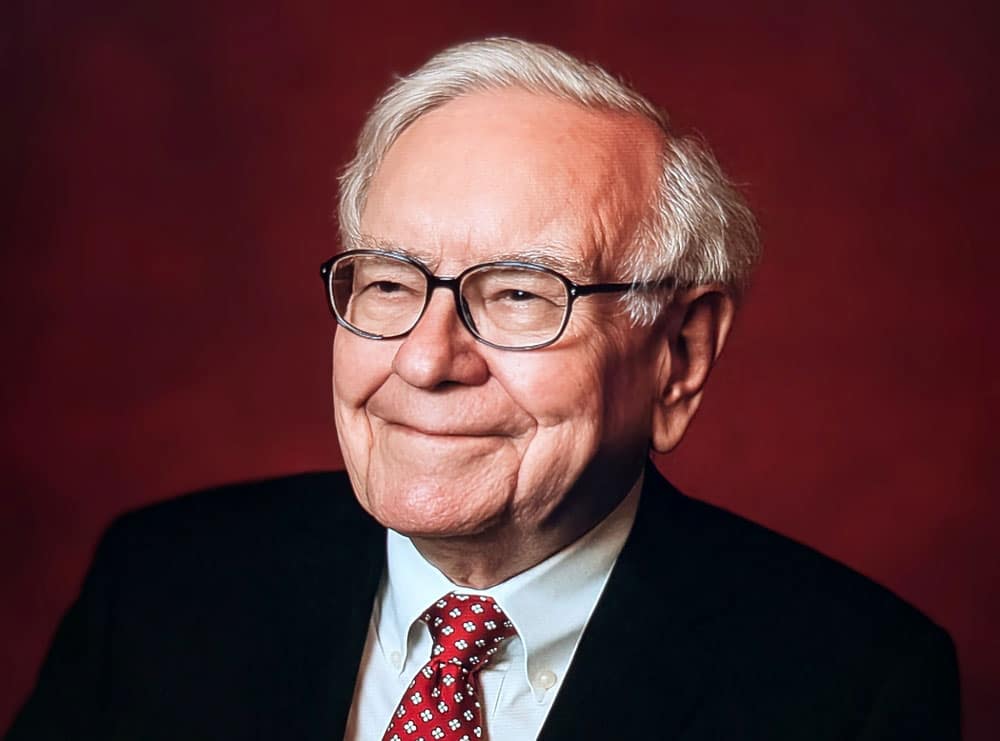
The Buffett Blueprint for Executive Wealth Creation
Warren Buffett’s long-term approach to wealth creation remains one of the most resilient and replicable investment philosophies in modern financial history. His method — rooted in discipline, simplicity, and emotional control — transcends market cycles and investor fads.
Buffett’s mantra is disarmingly straightforward: buy great businesses at fair prices, hold them long enough for compounding to work, and avoid unnecessary speculation. Yet the execution requires rare levels of patience, courage, and conviction — qualities that resonate deeply with today’s CEOs and institutional investors striving to protect capital while generating consistent returns.
Identifying Enduring Businesses with Strong Moats
At the core of Buffett’s portfolio lies a single concept: economic moats — those durable competitive advantages that protect a company from erosion by rivals. These moats can take many forms:
- Brand power (e.g., Coca-Cola, Apple) that commands customer loyalty and pricing leverage.
- Network effects (e.g., financial platforms or digital ecosystems) that improve with scale.
- Cost leadership allows companies to undercut competitors while maintaining profitability.
Buffett’s approach begins by focusing on business quality before valuation. He prioritizes the sustainability of a company’s economic engine over its current market multiple. For today’s leaders, this means emphasizing cash-generative resilience and operational durability — qualities often found in companies with:
- 10+ years of steady revenue and profit growth.
- Consistent or expanding profit margins despite varying input costs.
- Low leverage and solid interest coverage ratios.
- Disciplined reinvestment in core offerings rather than vanity projects.
“The first rule of investing,” Buffett reminds shareholders, “is don’t lose money. The second rule is don’t forget the first.”
In essence, protecting your downside is as important as capturing the upside. Executives evaluating opportunities should favor companies with diversified revenue streams, manageable debt exposure, and a track record of weathering economic headwinds.
Price Discipline: The Silent Edge
Buffett distinguishes himself not only by what he buys, but when and how. His discipline with pricing — refusing to chase optimism or panic — underpins his compounding success.
For modern investors, valuation can remain intuitive yet data-informed. Use relative valuation metrics such as:
- Price-to-earnings (P/E) ratio versus its 5- or 10-year average.
- Price-to-free-cash-flow (P/FCF) compared across industry peers.
- Enterprise value to EBITDA (EV/EBITDA) to gauge operating profitability.
Seasoned investors emphasize trend consistency over single data points. A company that commands premium valuations because of sustained cash efficiency or predictable returns on invested capital (ROIC) likely deserves it.
Buffett’s pragmatic view reinforces that value is not about low prices — it’s about paying a fair price for excellence. Missing out on a runaway stock is less costly than holding a mediocre company for a decade.
Buffett’s Current Portfolio: Clarity Through Concentration
The Berkshire Hathaway portfolio remains a masterclass in rational concentration. Buffett’s top positions mirror his philosophy: hold fewer, better assets that you genuinely understand.
Buffett’s Current Portfolio
| Company | Sector | Approx. Share of Portfolio |
|---|---|---|
| Apple Inc. | Technology | 21% |
| American Express Co. | Financial Services | 17% |
| Bank of America Corp. | Banking | 10% |
| Coca-Cola Co. | Consumer Goods | 9% |
| Chevron Corp. | Energy | 6% |
| Occidental Petroleum Corp. | Energy | 4.2% |
| Moody’s Corp. | Financial Services | 4.1% |
| Kraft Heinz Co. | Consumer Staples | 2.9% |
| Mitsubishi Corp. | Conglomerate | 2.9% |
| Other Holdings | Diversified | 22% |
This portfolio underscores several lessons relevant to HNWIs and executives alike:
- Concentration in high-quality, cash-rich brands drives performance.
- Exposure spans across cash flow–strong industries rather than speculative ones.
- Long-term conviction trumps short-term market rotation.
Holding for the Long Haul: The Patience Dividend
Buffett’s greatest advantage is not stock selection alone, but time horizon arbitrage — the ability to hold quality assets far longer than the average investor can emotionally withstand.
This form of patience compounds advantages exponentially:
- Dividends reinvest and amplify capital.
- Earnings growth increases intrinsic value.
- Tax efficiency compounds wealth across years rather than resetting with frequent trades.
Empirical studies support this approach. Between 1985 and 2022, S&P 500 companies with 15-year track records of positive ROIC outperformed the market by an average of 4.2% annually, excluding reinvested dividends.
In contrast, frequent trading reduces overall returns due to timing error and transaction costs. Buffett’s methodology proves simple, though rarely easy: make patience your alpha.
Staying Within the Circle of Competence
Buffett’s principle of investing only in businesses he understands remains vital in today’s data-saturated markets.
Understanding a company means having clarity on how it generates sustainable cash flow — not simply accepting narratives. Buffett famously sat out much of Silicon Valley’s early boom because he “could not predict which tech firm would still be dominant a decade later.”
This selective omission is not caution; it’s strategy. Limiting oneself to a circle of competence encourages depth over breadth. For modern investors, it translates to:
- Focus on sectors aligned with your expertise or professional domain.
- Build a watchlist of high-quality competitors within those fields.
- Follow earnings calls, annual letters, and capital allocation commentary.
Such familiarity ensures your capital allocation is grounded in understanding, not speculation — a key Buffett edge CEOs and wealth managers can emulate.
Building Behavioral Guardrails
The ultimate challenge in investing, Buffett insists, lies not in intelligence but temperament. The emotional discipline required to stay consistent amid volatility defines the great investors.
To systematize your behavior:
- Automate contributions to your core portfolio (reduces market timing).
- Set periodic rebalancing intervals (e.g., annually).
- Limit portfolio monitoring to quarterly reviews.
This insulation from emotional noise enables rational compounding — the silent superpower behind Buffett’s sustained success story.
The Index Fund as a Core Holding
Recognizing that many investors neither possess Buffett’s temperament nor analytical bandwidth, he advises a straightforward default: low-cost, broad-market index funds.
Buffett repeatedly told Berkshire shareholders that, upon his death, the trustee should allocate 90% of his estate to a U.S. index fund and 10% to short-term government bonds.
Such an allocation achieves diversified exposure, reduced fees, and market-matching returns — outperforming most active managers over multiyear periods.
For high-net-worth portfolios, adding Buffett-style selective positions to a strong passive core combines both worlds — stability and strategic outperformance.
Buffett-Style Investment Metrics
| Metric | Buffett’s Principle in Action | Practical Application for Executives |
|---|---|---|
| Sales Growth | 10+ years of steady expansion | Assess 10-year CAGR via annual filings |
| Operating Margin | Stable or rising | Compare past five-year averages |
| Free Cash Flow | Positive and increasing | Evaluate reinvestment ratio trends |
| Debt/Equity Ratio | <0.5 ideal | Prioritize stronger balance sheets |
| ROIC | >8% | Indicates efficient capital deployment |
| Dividend Policy | Sustainable, not excessive | Focus on reinvestment opportunities |
| Price/Earnings (P/E) | Below industry average | Identify relative undervaluation |
| Price/FCF | Consistent with peers | Avoid overleveraged firms |
| EV/EBITDA | <10x (varies by sector) | Benchmark efficiency metrics |
| Cash Reserves | Ample for downturns | Seek liquidity strength |
| Customer Retention | High | Indicates moat and pricing power |
| Brand Loyalty | Strong qualitative signal | Evident in repeat revenues |
| R&D Productivity | Shareholder accretive | Avoid bloated innovation spend |
| CEO Tenure | Long-term strategic mindset | Reduces leadership risk |
| Gross Margin | Stable across cycles | Reflects operational resilience |
| International Exposure | Balanced | Enhances currency insulation |
| Market Leadership | Top 3 in core markets | Reinforces sustainable moats |
| ESG Governance | Transparent and pragmatic | Long-term social license to operate |
| Share Buybacks | Opportunistic, value-accretive | Avoid debt-fueled programs |
| Management Ethics | High trust factor | Integral to Buffett’s philosophy |
| Portfolio Turnover | Minimal | Aligns with compounding approach |
| Average Holding Period | 5+ years | Encourages long-term compounding |
| Risk Concentration | Moderate | High conviction, not overexposure |
| Tax Efficiency | Optimized through holding | Avoid excessive realization events |
| Historical CAGR (Berkshire) | ~19.8% (1965–2023) | Proof of long-term compounding power |
Buffett’s success underscores that wealth creation thrives on clarity, discipline, and patience — not complexity. For executives and institutional investors, this means structuring portfolios around:
- High-quality companies with defensible moats.
- Fair but disciplined entry prices.
- The mental fortitude to hold through volatility.
Buffett’s timeless maxim endures: “It’s far better to buy a wonderful company at a fair price than a fair company at a wonderful price.”
In an era of algorithmic trading and social media speculation, his simplicity has become an unparalleled competitive advantage for those willing to think — and act — long term.
Add CEOWORLD magazine as your preferred news source on Google News
Follow CEOWORLD magazine on: Google News, LinkedIn, Twitter, and Facebook.License and Republishing: The views in this article are the author’s own and do not represent CEOWORLD magazine. No part of this material may be copied, shared, or published without the magazine’s prior written permission. For media queries, please contact: info@ceoworld.biz. © CEOWORLD magazine LTD