


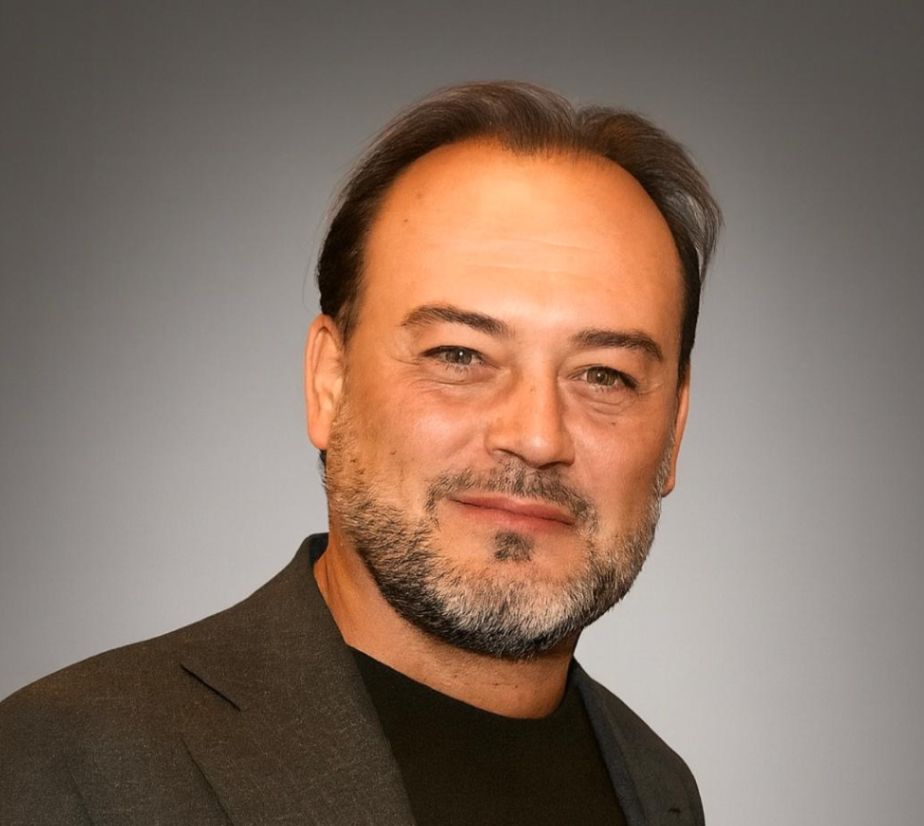
It’s truly a pleasure to interview Andrea Biffi, formerly a CEO in the MedTech world and today an entrepreneur, investor, and board member, with roles and projects at an international level. Tomorrow’s leaders use technology and investments to learn, evolve, create efficiencies, scale up, and, of course, serve people in markets that are strategic for the country and the global community.
Andrea, tell us about your professional journey and what you are currently working on.
Over the past twenty years, I have worked in the pharmaceutical, MedTech, and clinical sectors, building deep and broad experience in all key areas of healthcare innovation. As CEO, I led a pharmaceutical company that experienced exponential growth, achieving significant milestones and expanding investments into various fields: from pharmaceuticals to microbiota research, and even robotic surgery. This evolution required me to learn quickly and continuously. It was a tremendous stimulus that led me to embracenew technologiesand use them to improve both my own performance and that of the companies I led.
Over time, I have had the opportunity to collaborate with organizations around the world, building strategic partnerships and completing important exits: (1) SOFAR, sold to the Alfasigma group; (2) a robotic surgery company, first sold to Asensus Surgical, a company listed on the NYSE, and then – as shareholder and board member – accompanied to a second exit in 2024 to Karl Storz, one of the most prominent players in the MedTech landscape; (3) other operations in the clinical and health technology sectors.
Today, I focus my activities on investments in Healthcare and IT, supporting technologies that bring competitive advantage, greater safety, and transparency. I am also a board member and investor in several startups in the healthcare and technology sectors, with the aim of bridging the innovation gaps I have observed for years from within traditional systems.
What is the role of exponential technologies like blockchain and AI in strategic sectors such as MedTech?
Exponential technologies today are no longer accessories, but fundamental components in the evolution of healthcare systems. AI represents the heart of innovation: predictive diagnostics, clinical automation, decision support, process optimization, personalized therapeutic pathways. It is already solving long-standing inefficiencies. Blockchain, in particular, guarantees the security, integrity, and traceability of health data — a crucial aspect in a sector where reliability is essential. It offers a transparent and distributed data governance model, ideal for reducing risks, errors, and information asymmetries. I believe that AI and blockchain will be indispensable for building truly scalable, sustainable, and safer healthcare systems.
Which of your companies, startups, or investments are moving in this direction?
A concrete example isDigitCo– Tokenance, which perfectly embodies this direction: I am extremely convinced that it will scale rapidly, expanding the use of its solutions across various sectors. In addition to this, I personally follow several startups that are integrating AI, intelligent automation, advanced data governance, and, where possible, blockchain applications in the health sector. The focus is always the same: reducing inefficiencies, increasing transparency, improving safety, and creating real operational value.
Do you have one or two tips for young people who want to start a business now, in terms of capital, people, and technology?
Certainly. A couple of suggestions, based on my experience. (1) Capital: Raise a little, but early. Initially, capital is needed to learn and validate, not to scale. It’s more important to have investors who provide time, support, and vision. (2) Tech: Build only the core. Everything else should be managed with existing solutions. Technology must be a multiplier, not a burden.
In short: speed, the ability to learn, intelligent use of technology, and flexible teams. This is what allows us to build truly scalable companies today.
Add CEOWORLD magazine as your preferred news source on Google News
Follow CEOWORLD magazine on: Google News, LinkedIn, Twitter, and Facebook.License and Republishing: The views in this article are the author’s own and do not represent CEOWORLD magazine. No part of this material may be copied, shared, or published without the magazine’s prior written permission. For media queries, please contact: info@ceoworld.biz. © CEOWORLD magazine LTD