
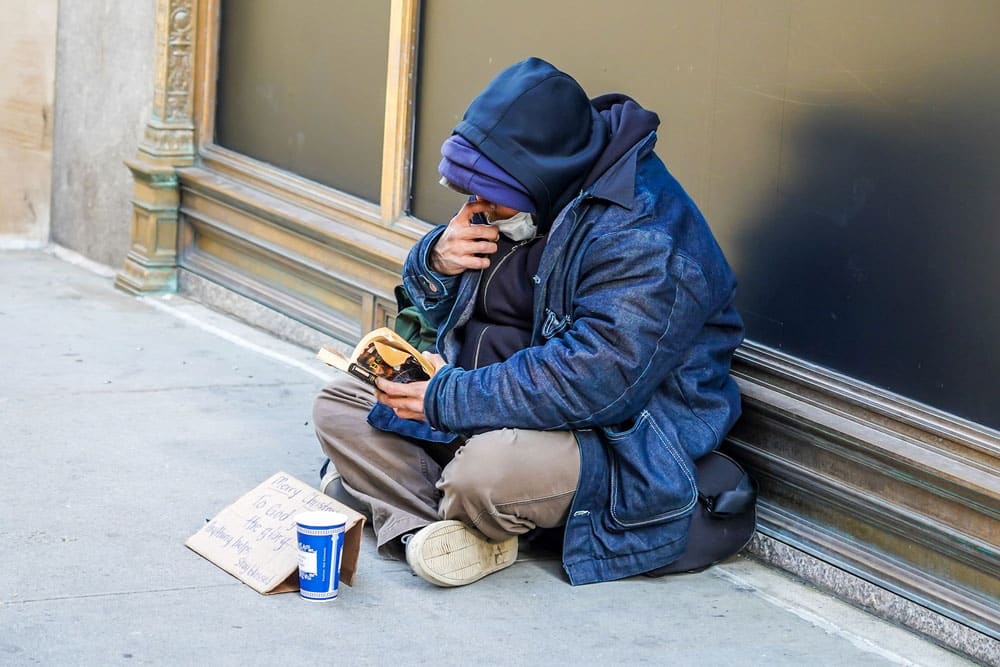
America’s Growing Housing Divide: Homelessness in the United States has become an urgent economic and social crisis. As of 2024, an estimated 772,000 Americans are without stable housing — roughly 230 people for every 100,000 residents. While this number fluctuates annually, the trend line is clear: in many parts of the country, housing affordability has eroded faster than income growth, and the gap is widening.
At CEOWORLD Magazine, we analyzed the latest data from the U.S. Department of Housing and Urban Development (HUD), cross-referenced with 2024 population estimates from the U.S. Census Bureau, to rank U.S. states by homelessness rate per 100,000 residents. The findings are as sobering as they are instructive for policymakers and investors alike.
The Top 10 States With the Highest Homelessness Rates, together, represent over half of America’s homeless population. But more tellingly, they embody the intersection of prosperity and precarity — places where economic dynamism coexists with acute inequality.
Hawaii: Paradise With a Housing Problem
Hawaii ranks first, with 805 homeless individuals per 100,000 residents — more than three times the national average.
The island’s geographic isolation inflates the cost of goods, labor, and housing. Median home prices hover near $900,000, while rental vacancy rates remain among the lowest in the nation. Despite strong tourism revenues, service-sector wages have failed to keep pace. The result is a systemic affordability crunch that forces even full-time workers into precarious living arrangements.
Washington, D.C.: Wealth and Want, Side by Side
The District of Columbia ranks second with 800 homeless individuals per 100,000 residents. The city’s paradox is glaring: it boasts one of the highest GDPs per capita in America — fueled by government, tech, and consulting — yet struggles with one of the nation’s steepest costs of living.
Public housing demand far exceeds supply, and new developments often skew luxury. The city’s homelessness crisis underscores the policy failure to translate wealth concentration into inclusive opportunity.
States With the Highest Homelessness Rates in America
| Rank | State | State Code | Homelessness per 100,000 Residents | Overall Homeless Population |
|---|---|---|---|---|
| 1 | Hawaii | HI | 805 | 11,637 |
| 2 | District of Columbia | DC | 800 | 5,616 |
| 3 | New York | NY | 795 | 158,019 |
| 4 | Oregon | OR | 535 | 22,875 |
| 5 | Vermont | VT | 533 | 3,458 |
| 6 | California | CA | 474 | 187,084 |
| 7 | Massachusetts | MA | 411 | 29,360 |
| 8 | Washington | WA | 396 | 31,554 |
| 9 | Alaska | AK | 363 | 2,686 |
| 10 | Colorado | CO | 314 | 18,715 |
| 11 | Nevada | NV | 309 | 10,106 |
| 12 | Rhode Island | RI | 220 | 2,442 |
| 13 | New Mexico | NM | 217 | 4,631 |
| 14 | Illinois | IL | 203 | 25,832 |
| 15 | Arizona | AZ | 194 | 14,737 |
| 16 | Maine | ME | 192 | 2,702 |
| 17 | Montana | MT | 177 | 2,008 |
| 18 | New Hampshire | NH | 159 | 2,245 |
| 19 | Minnesota | MN | 159 | 9,201 |
| 20 | South Dakota | SD | 145 | 1,338 |
| 21 | Idaho | ID | 137 | 2,750 |
| 22 | Nebraska | NE | 136 | 2,720 |
| 23 | New Jersey | NJ | 134 | 12,762 |
| 24 | Florida | FL | 134 | 31,362 |
| 25 | Oklahoma | OK | 133 | 5,467 |
| 26 | Delaware | DE | 129 | 1,358 |
| 27 | Missouri | MO | 117 | 7,312 |
| 28 | Tennessee | TN | 115 | 8,280 |
| 29 | Kentucky | KY | 114 | 5,231 |
| 30 | Utah | UT | 110 | 3,869 |
| 31 | Georgia | GA | 110 | 12,290 |
| 32 | North Dakota | ND | 109 | 865 |
| 33 | Pennsylvania | PA | 108 | 14,088 |
| 34 | North Carolina | NC | 105 | 11,626 |
| 35 | West Virginia | WV | 101 | 1,779 |
| 36 | Ohio | OH | 99 | 11,759 |
| 37 | Maryland | MD | 97 | 6,069 |
| 38 | Michigan | MI | 96 | 9,739 |
| 39 | Kansas | KS | 94 | 2,793 |
| 40 | Connecticut | CT | 93 | 3,410 |
| 41 | Indiana | IN | 91 | 6,285 |
| 42 | Arkansas | AR | 90 | 2,783 |
| 43 | Texas | TX | 89 | 27,987 |
| 44 | Alabama | AL | 89 | 4,601 |
| 45 | Wyoming | WY | 85 | 501 |
| 46 | Wisconsin | WI | 85 | 5,049 |
| 47 | South Carolina | SC | 84 | 4,593 |
| 48 | Iowa | IA | 81 | 2,631 |
| 49 | Virginia | VA | 81 | 7,141 |
| 50 | Louisiana | LA | 75 | 3,469 |
| 51 | Mississippi | MS | 35 | 1,041 |
New York: Density Meets Inequality
New York, ranking third at 795 per 100,000, reflects a more complex picture. Roughly 158,000 New Yorkers experience homelessness, the vast majority concentrated in New York City.
Despite the city’s extensive shelter system — the largest in the nation — chronic homelessness has persisted due to skyrocketing rents, tight zoning restrictions, and limited mental health infrastructure. New York’s story is less about neglect and more about scale: even robust public spending can’t outpace systemic affordability pressures in high-demand markets.
West Coast Woes: Oregon, California, and Washington
The Pacific Coast forms the epicenter of America’s housing emergency. Oregon (535), California (518), and Washington (504) all feature in the top seven.
These states share a similar economic paradox: booming tech economies, progressive politics, and chronic housing underproduction.
Local opposition to density, complex permitting laws, and rising construction costs have created an environment where supply elasticity has collapsed. The result is visible in every major city — Portland, San Francisco, Los Angeles, and Seattle — where tent encampments have become symbols of both civic failure and social fragmentation.
Small States, Big Struggles: Vermont, Maine, and Alaska
The presence of Vermont (533) and Maine (498) in the top ranks defies easy stereotypes. These small, rural states are confronting unique challenges: limited shelter infrastructure, harsh winters, and an aging population that strains state resources.
Alaska (474) adds another dimension — remote geography, seasonal employment, and rising costs of goods all contribute to housing instability. For policymakers, these cases highlight that homelessness is not merely an urban phenomenon — it’s a structural one.
Nevada: Growth Without Inclusion
Nevada rounds out the top 10 with 438 per 100,000 residents, or roughly 13,655 individuals. Las Vegas, despite record tourism revenues and job creation, remains plagued by housing scarcity and income volatility. Gig economy workers, contractors, and service employees often lack access to affordable rentals. The state’s heavy reliance on the hospitality sector has made it acutely vulnerable to economic shocks, amplifying housing insecurity during downturns.
Beyond the Numbers: The Economics of Homelessness
For business leaders, the homelessness crisis is not a social issue alone — it’s an economic externality. Homelessness reduces labor participation, strains municipal budgets, and depresses local productivity.
Every unsheltered individual represents both a human tragedy and a lost economic contributor. Studies estimate that each chronically homeless person costs taxpayers $35,000 to $45,000 per year through emergency healthcare, policing, and public services.
For CEOs and investors, these figures carry a broader implication: housing stability is economic infrastructure. Without it, workforce reliability, public safety, and regional growth all erode.
What CEOs, Investors, and Policymakers Can Do
- Invest in Workforce Housing:
Corporate real estate strategies should expand to include affordable workforce housing initiatives, particularly in high-cost regions where recruitment and retention suffer. - Support Public-Private Partnerships (PPPs):
The most effective housing solutions emerge from cross-sector collaboration — governments, developers, and corporations sharing risk and reward. - Champion Zoning Reform:
Restrictive zoning laws are a silent drag on productivity. Business advocacy groups can wield influence to modernize zoning and encourage density. - Prioritize Mental Health and Job Training:
Homelessness is often cyclical. Sustainable solutions pair housing with behavioral health support, skills retraining, and pathways back to the workforce. - Measure ROI in Human Capital:
Treat housing stability not as charity, but as an investment in social resilience and economic competitiveness.
A Leadership Imperative
Homelessness is not confined to the margins; it’s a reflection of the nation’s structural inefficiencies. Addressing it demands the same rigor executives bring to supply chain optimization or M&A strategy.
As the data reveals, the issue spans from paradise islands to powerhouse economies, touching blue states and red states alike. The true test of leadership — corporate or political — lies in building systems where prosperity does not come at the expense of dignity.
In the words of one New York CEO interviewed for this analysis: “If we can design AI to predict markets, we can design housing systems that don’t fail people.”
It’s time the C-Suite sees homelessness not as a policy headline, but as a strategic risk to America’s long-term economic stability — and a test of its collective conscience.
Have you read?
Countries – home ownership rate. World’s Best Destinations To Go Skydiving.
World’s Most Valuable Companies Ranked by Profit Per Employee. World’s Most Powerful Passports.
Add CEOWORLD magazine as your preferred news source on Google News
Follow CEOWORLD magazine on: Google News, LinkedIn, Twitter, and Facebook.License and Republishing: The views in this article are the author’s own and do not represent CEOWORLD magazine. No part of this material may be copied, shared, or published without the magazine’s prior written permission. For media queries, please contact: info@ceoworld.biz. © CEOWORLD magazine LTD