India’s Wealth Powerhouses: The Rise (and Dip) of Ambani and Adani

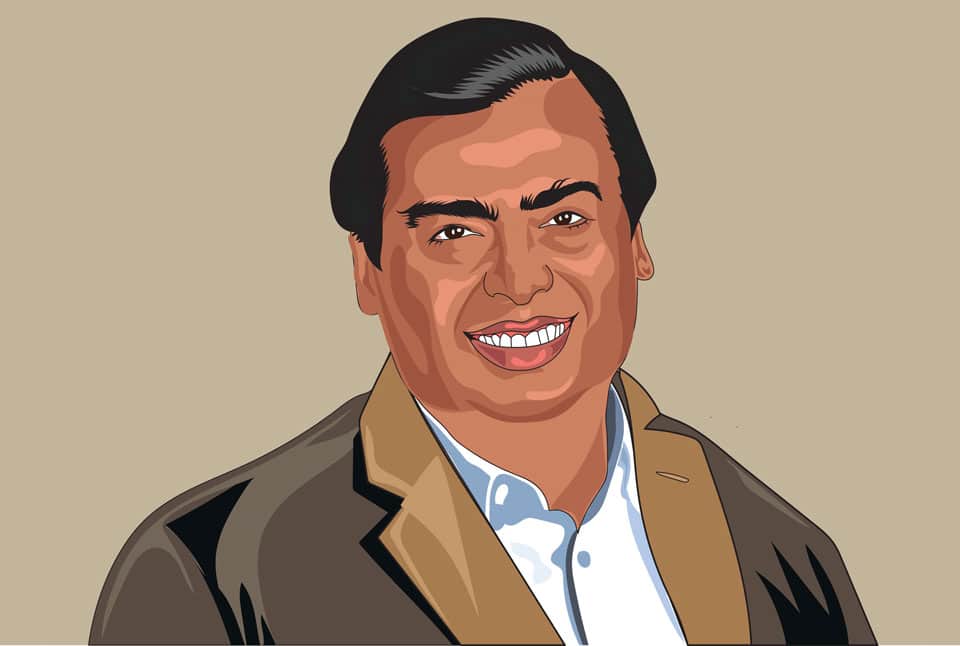
Ambani Holds the Crown: Mukesh Ambani, chairman of Reliance Industries, remains India’s richest person and Asia’s wealthiest individual, with a net worth of $96.8 billion in 2025. Globally, Ambani ranks 18th, underscoring not just his dominance in India but his enduring place in the global billionaire hierarchy.
Reliance Industries spans energy, petrochemicals, telecom, retail, and digital services, giving Ambani a diversified empire that continues to influence both Indian markets and global supply chains. While his wealth dipped by more than $10 billion over the past year due to share price declines, Ambani’s grip on India’s billionaire crown remains firm.
Adani’s Position: Resilient but Lower
Following Ambani is Gautam Adani, chairman of the Adani Group, with an estimated fortune of $87.3 billion, ranking him 20th globally. Once Asia’s richest person in 2022, Adani’s wealth has been volatile following regulatory scrutiny and investor turbulence.
Still, his diversified group—spanning ports, airports, energy, and infrastructure—anchors his position as India’s second-richest man. His $87.3 billion fortune places him just behind Francoise Bettencourt Meyers ($91.8 billion) on the global rich list.
Asia’s Billionaire Context
The rankings highlight a striking reality: while Ambani and Adani remain household names in India, Asia’s billionaire stage is now shared with Chinese tech and consumer giants.
- Zhong Shanshan (China): $76.8B, 23rd globally
- Ma Huateng (China): $69.9B, 25th globally
- Zhang Yimingi (China): $59.6B, 27th globally
Ambani still leads the continent, but Adani has slipped behind China’s top billionaires—reflecting both India’s market volatility and China’s continuing wealth generation in technology and consumer sectors.
India’s Expanding Billionaire Class
Despite dips in its two top fortunes, India’s billionaire tally grew from 200 in 2024 to 205 in 2025, according to the CEOWORLD magazine wealth trackers. Collectively, these billionaires are worth $941 billion, down from $954 billion a year earlier.
The decline—about $13 billion in aggregate—was driven primarily by losses from Ambani and Adani, who together shed more than $20 billion due to share price corrections. Still, the rising headcount signals the resilience of India’s entrepreneurial ecosystem.
What CEOs, Investors, and Policymakers Should Note
- Diversification Is Power
Ambani’s fortune rests on a diversified empire—telecom, retail, energy, digital platforms—making him more resilient than peers heavily concentrated in single sectors. - Volatility Is the Risk
Adani’s trajectory shows the risks of regulatory headwinds, corporate leverage, and public market volatility. Billionaire wealth in emerging markets can swing dramatically. - India’s Billionaire Growth Is Structural
The increase in billionaire count reflects deeper currents: India’s growing consumer base, digitization, and global capital flows into its markets. - Global Context Matters
Even as India’s wealth expands, Asian peers in tech and consumer goods (China’s Zhang, Zhong) remind us that India is competing in a broader, integrated billionaire economy.
Mukesh Ambani and Gautam Adani remain India’s billionaire giants, though their fortunes have dipped in 2025. Ambani continues to hold Asia’s top spot with $96.8 billion, while Adani remains in the global top 20 with $87.3 billion.
Together, they symbolize the scale, ambition, and volatility of Indian capitalism—shaping industries from energy to digital services, from ports to retail. For CEOs, investors, and policymakers, their trajectories underscore a critical truth: India’s billionaire class may fluctuate in fortune, but its influence is expanding relentlessly.
Have you read?
The World’s Best Business Schools.
The World’s Best Fashion Schools.
The World’s Best Hospitality And Hotel Management Schools.
Global Mobility and Wealth Security: Why Citizenship by Investment (CBI) and Residency by Investment (RBI) Programs Are Essential for Global Executives and High-Net-Worth Individuals.
Add CEOWORLD magazine as your preferred news source on Google News
Follow CEOWORLD magazine on: Google News, LinkedIn, Twitter, and Facebook.License and Republishing: The views in this article are the author’s own and do not represent CEOWORLD magazine. No part of this material may be copied, shared, or published without the magazine’s prior written permission. For media queries, please contact: info@ceoworld.biz. © CEOWORLD magazine LTD