I’ve spent most of my life being told to get my head out of the clouds. Teachers said it. Bosses implied it. Even my own inner critic has blurted it out: “Focus, Gavin. Stop drifting. Grow up.”
But I believe the world could do with a few more heads in the clouds.
Somewhere between the chaos of inboxes, meetings, and mortgages, we’ve forgotten how to wander. We’ve confused being busy with being alive. We’ve replaced daydreams with deadlines, imagination with efficiency. Yet the truth is, daydreaming isn’t a distraction, it’s a lifeline.
I think too many people undervalue their ability to daydream and pass it off as a sort of nothingness. But my “nothing” is peaceful, healthy, calm. It’s not wasted time, it’s sacred space. It’s where I meet myself again.
Stillness doesn’t come naturally to me. I’m a fidgeter, a talker, a thinker on overdrive. My old school reports read like a character study in creative chaos: “Gavin is a dreamer.” “He’s often in his own little world.” “He needs to concentrate more.”
Back then, being lost in thought was a flaw. But now I see it differently, that “own little world” was where my imagination learned to breathe.
Daydreaming demands stillness, an intentional kind of nothingness. Not scrolling, not planning, just being. It’s a pause that lets your imagination stretch its legs and your heart take a breath.
In a society that worships productivity, doing nothing feels rebellious. But it’s in that nothingness that we create everything.
Daydream (noun): to spend time thinking on pleasant things until you become unaware of your surroundings.
Daydreamer (noun): someone who spends a great deal of time in their head and gets lost there, for they have a universe inside them.
A universe inside them. Isn’t that beautiful?
We treat daydreaming like a childhood hobby we’ve outgrown, but it’s actually one of the purest expressions of what makes us human, the ability to imagine something that doesn’t yet exist. When you allow your mind to drift, you’re not escaping reality; you’re expanding it.
I often tell audiences that to be bloody brilliant at daydreaming, it requires stillness, the ability to tune out from everything around you. That tuning out is an act of self-care. It’s how you reset your nervous system, unlock creativity, and let the magic bubble back to the surface.
Here’s the part the dreamers have been waiting for: science agrees with us.
When your mind wanders, it activates the default mode network, your brain’s creative playground. It’s where imagination, memory, and emotion collide to form new ideas.
We spend nearly half our waking hours daydreaming, and there’s a reason for that. It’s our brain’s natural rehearsal space for problem-solving and empathy. Newton wasn’t struck by a flash of brilliance under that apple tree, he was daydreaming. J.K. Rowling was on a train, lost in thought, when a boy wizard wandered into her imagination. Einstein called his daydreams “thought experiments.”
Mozart, Da Vinci, and countless others scheduled time to do absolutely nothing, just to let their minds roam.
As I wrote in my book: “Visionaries aren’t special; they’re just daydreamers who refused to wake up.”
That’s it. The Wright brothers were dreamers with dirty hands. Steve Jobs was a dreamer with a sketchpad. Greta Thunberg is a dreamer with a megaphone. Every great leap forward, from art to science, from invention to revolution, started with someone staring out the window, daring to imagine the world differently.
So, the next time someone catches you zoning out, tell them you’re not distracted. You’re training to be a visionary.
If you’ve ever watched a child at play, you’ll know this truth instinctively: we’re born to daydream. Kids can turn a stick into a sword, a chair into a spaceship, a cardboard box into a time machine. They don’t need prompts or agendas, just permission.
Yet as adults, we trade wonder for workflow. We tell kids to get their heads out of the clouds, and then wonder why our grown-up world feels so grey.
When kids zone out, we call it daydreaming. When adults do it, we call it vision. But it’s the same skill – imagination, curiosity, creativity – just wearing bigger shoes.
The tragedy is we educate it out of children. When they are tiny, we encourage it, and then one day we tell them to stop. We praise focus overflow, output over originality. But the “head-in-the-clouds” ones, they’re the thinkers, the artists, the inventors, the leaders. They’re the ones who remind us that life is meant to be imagined before it’s lived.
Psychologist Erin Westgate’s research showed that when people are asked simply to “think meaningful thoughts,” they spiral into worry. But when they’re told to think about something pleasant and meaningful, joy floods in.
That’s what daydreaming does. It gives your brain permission to play without purpose. It’s “thinking for pleasure,” and it’s vital.
Daydreaming calms stress, boosts creativity, and even strengthens confidence. When you picture yourself succeeding – not in the “manifestation” sense, but in the genuine practice of envisioning – you’re training your mind to believe in possibility. You’re rehearsing bravery.
Confidence begins in imagination. Every time you picture a kinder version of yourself or a braver tomorrow, you’re already halfway there.
Once, in a burst of midlife mischief, I tried a bunny-hop on my son’s scooter, at full speed. The scooter stopped; I didn’t. Gravity won. It was ridiculous, painful, and perfect. Because it reminded me that dreaming big sometimes hurts, but it’s always worth it.
Daydreaming takes bravery. In a world that rewards cynicism, to believe in magic – to believe in yourself – is an act of rebellion. Or as I wrote in Confidently Lost: “You believed in Santa for ten years. You can believe in yourself for ten seconds.”
These are hard times for dreamers. We ask kids what they want to do, not who they want to be. But it’s the dreamers, the ones with their heads in the clouds and hearts on their sleeves, who build bridges between the possible and the extraordinary.
Daydreaming fuels confidence, compassion, and creativity. It’s how we connect the dots between who we are and who we could become. When your head’s in the clouds, your heart’s free to follow.
I’ve been told my whole life that I “wear my heart on my sleeve” like it’s a bad thing. But that’s where the good stuff lives. Daydreamers are heart-on-sleeve people. We feel deeply, imagine wildly, love loudly. We see the world not just as it is, but as it could be.
And when you lead or love from that place, people feel it. You become a mirror for their own possibility. You remind them it’s okay to wonder, to wander, to dream.
So here’s your challenge: stop trying to get your head out of the clouds. Put it back there.
Schedule time to drift. Sit by a window and let your thoughts wander. Stare at a ceiling, a cloud, a cup of tea. Go for a long, pointless walk and think about everything and nothing. Let your imagination meander until it bumps into something brilliant.
Because the world doesn’t need more people who’ve figured everything out. It needs more people willing to dream it differently.
Visionaries, after all, are just daydreamers who refused to wake up.
And those clouds? They’re not an escape, they’re a beginning.
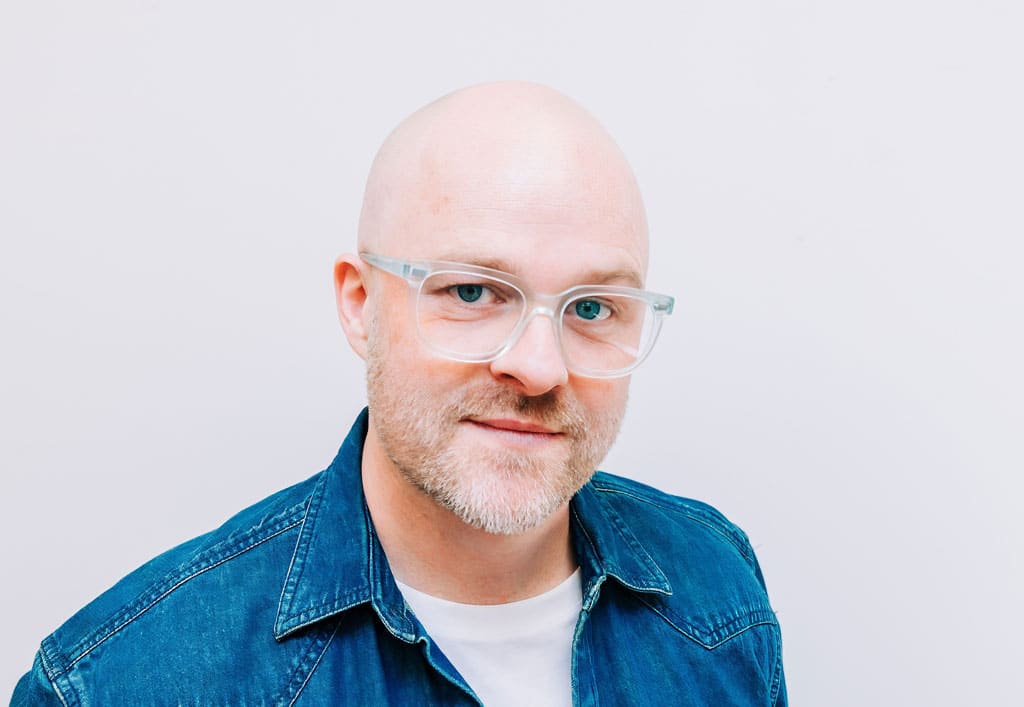
Written by Gavin Oattes, author of Confidently Lost: Finding Joy in the Chaos and Rediscovering What Matters Most in Life.
Add CEOWORLD magazine as your preferred news source on Google News
Follow CEOWORLD magazine on: Google News, LinkedIn, Twitter, and Facebook.License and Republishing: The views in this article are the author’s own and do not represent CEOWORLD magazine. No part of this material may be copied, shared, or published without the magazine’s prior written permission. For media queries, please contact: info@ceoworld.biz. © CEOWORLD magazine LTD