Rewiring Global Finance: An Interview with Transformation Leader Werner van Rossum

In an era where data is abundant, global companies are under intense pressure to modernize their financial systems, streamline operations, and accelerate decision-making. But transforming the financial core of a multinational enterprise is one of the hardest problems in business, requiring deep technical understanding, strategic vision, and the ability to align people across continents and cultures.
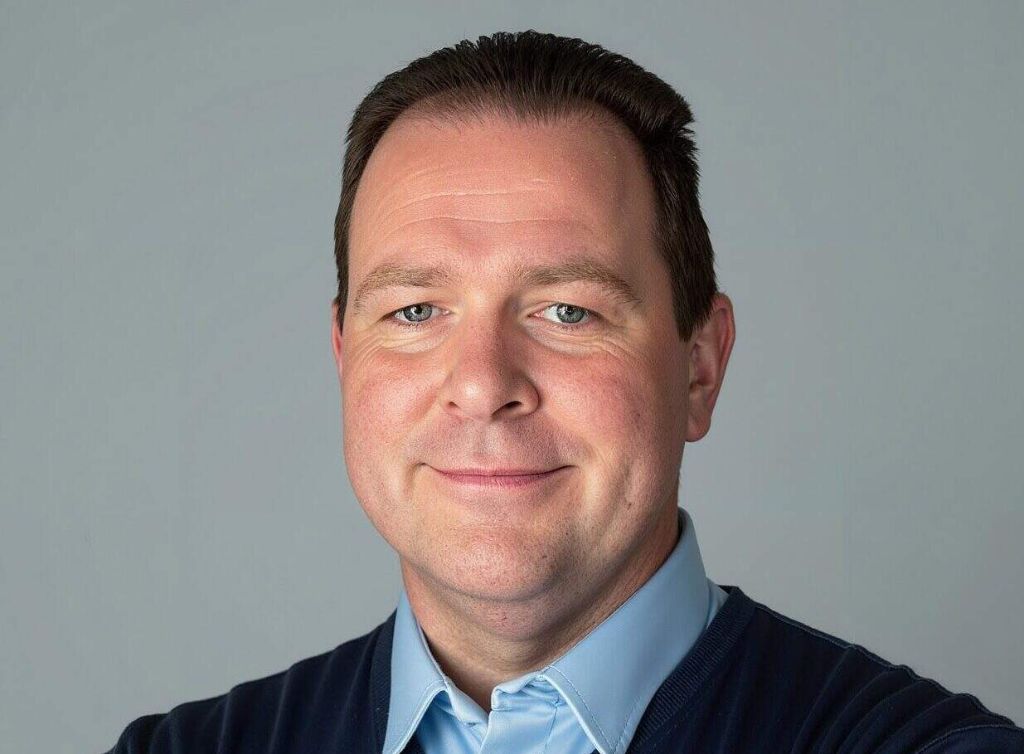
Few leaders operate effectively at that intersection. One of them is Werner van Rossum, a senior finance transformation leader at ExxonMobil known for combining deep technical expertise with energy and drive to simplify complex systems, harmonize global processes, and build modern analytics capabilities that enable faster, smarter decisions. His thought leadership has appeared across major business platforms, including the European Business Review and Medium, and his reputation has been shaped primarily through years of hands-on transformation work across Europe, the Middle East, Africa, and the United States.
CEOWORLD magazine sat down with Werner to discuss his journey, his philosophy, and how he drives meaningful change inside one of the world’s largest companies.
Werner, you’ve built a global career shaping finance transformation across multiple regions. How did your journey begin?
Werner: I grew up in the Netherlands and studied International Business at Maastricht University, where I earned a Master of Science with a specialization in Accounting and Finance, which included detailed work on financial systems. During my studies, I spent a semester abroad in Denmark, which sparked a lasting appreciation for living and working in international environments.
From early on, I wanted to build a career in a large multinational organization. One that would allow me to work across borders, understand different business cultures, and have impact at scale.
What energized me most was that, from day one, I was trusted with complex problems spanning teams, countries, and systems. That never really stopped. Over time, it turned into a personal journey across the world. I’ve supported our global business in more than 20 countries and lived and worked in the Netherlands, Belgium, and Hungary before being asked to relocate to Houston to lead a major transformation initiative based on my experience.
Each move exposed me to new cultures, regulatory environments, and operational challenges – and reinforced how critical clarity and alignment are in global organizations.
What attracted you to the energy industry?
Werner: Toward the end of my studies, I had opportunities to join an investment bank, consultancy firms, and the energy industry. I chose energy because it was already known for investing heavily in people, systems, and processes, and I wanted to learn in an environment that took long-term capability building seriously.
I also appreciated the direct, no-nonsense culture and focus on results. Over time, I came to realize that energy is one of the most globally integrated industries in the world. You’re operating across full value chains that are, in many cases, comparable to Fortune 500 companies in their own right: upstream, downstream, manufacturing, chemicals, and more.
Decisions have real operational impact and the potential to affect lives across the world. I’ve always been drawn to environments where the scale is big, the complexity is real, and the work truly matters.
You moved from Brussels to Houston to take on major transformational responsibilities. What prompted that transition?
Werner: In Brussels, I led financial planning and analysis across Europe, Africa, and the Middle East for our Energy Products business. It was a highly integrated portfolio with refineries, supply assets, retail, marine, aviation, and trading operations spanning 10 countries.
I fundamentally reshaped how planning and performance management were done by reducing manual work, strengthening insight-driven analysis, and helping leaders focus on what truly drove performance. Some of the broader lessons from that experience were later reflected in an article published in the European Business Review.
Around that time, the company launched a multi-year enterprise transformation to modernize core systems, harmonize data, and simplify global financial processes. Based on my experience delivering complex transformations and the impact achieved in Brussels and earlier roles, I was asked by senior leadership to relocate to Houston to lead a key track of that global program.
Houston is where the enterprise comes together. If you want to influence how decisions are made across the company, and across the world, this is where you need to be.
Werner, your work often centers on transformation: simplifying complex processes and designing strategies to integrate global finance operations. How do you approach transformation in a global environment?
Werner: The first step is always clarity, defining what we’re trying to achieve, not just what we’re trying to fix operationally. Too often, organizations jump straight into solving problems without anchoring them in strategy.
Many transformations start with technology decisions. That creates a real risk of turning the effort into a purely technical IT implementation with limited connection to business value. I prefer to start by understanding the strategic objectives, defining the desired business outcomes, and assessing whether organizational or operating model changes are required to increase the likelihood of success.
With that clarity in place, you can articulate a strong project charter, align stakeholders, and secure executive sponsorship before moving into detailed planning and execution.
Transformation is never about tools alone. It’s about enabling the organization to operate in a fundamentally better way – directly tied to tangible outcomes such as lower cost, higher revenue, or improved cash flow.
Transformation isn’t about tools alone. It’s about enabling the organization to operate in a fundamentally better way.
You are deeply involved in one of the largest financial transformations in the industry. What kind of impact does this work have on a company of this scale?
Werner: The impact is significant – our CEO mentioned in our recent plan update that SAP calls this implementation of new enterprise-wide processes and data redesign the most holistic and transformative in the industry. When you redesign planning, reporting, and analytics at enterprise scale, you fundamentally reshape how a business is run.
For example, consolidating thousands of dashboards into strategic analytics, harmonizing KPIs, and ensuring a single source of truth allows leadership teams to see performance clearly, without hours of reconciliation or room for inaccurate interpretation.
Financial advisors move from data cleansing and validation to insight-driven analysis, focusing their time where it truly matters and increasing employee satisfaction at the same time. Very few people start their careers after university aspiring to do repetitive, transactional work. By modernizing data foundations and architecture, we also move toward leading insights rather than lagging analysis, and we do so at a substantially lower cost.
Ultimately, the impact is not just financial. It enhances speed, transparency, accountability, and confidence. Those are the ingredients of superior decision-making.
What makes these transformations so difficult for large organizations?
Werner: Large organizations carry decades of legacy systems, workarounds, accumulated complexity, and local practices. Even when everyone agrees that simplification is the goal, it is often difficult to let go of the familiar and radically change. There’s an element of courage of conviction involved. Engaging in direct, open conversations with senior leaders across the world to challenge the status quo and align on a different way of working that is both more efficient and more cost-effective, without sacrificing critical insights that drive action.
One of the biggest and underestimated challenges is change management: the hearts and minds. Trying to push through a massive transformation without getting leaders everywhere to sign up and go along on the journey risks derailing end-user adoption and can make the entire transformation fail.
You’ve written about topics like decision-making, planning, and leadership. How do those ideas connect to your transformation work?
Werner: Everything I write stems from real-world experience. In transformation, the technical work is only half the story. The other half is getting teams, leaders and in fact whole organizations inspired, engaged and bought into the change. When people see the benefits of the change, it can redefine how people think, how they make decisions, and how they ultimately help ensure the transformation is successful.
Whether I’m writing about simplifying planning and stewardship, managing strategic change at scale, implementing cutting edge transformative systems, or navigating leadership, the themes come from what I see every day: large organizations struggle not because they lack talent, but because they’re overloaded with complexity and feel safe in the status quo.
Clear thinking leads to clear systems, which in turn enable superior analytics and better decisions. That connection is what ties everything together.
Werner, what accomplishment stands out to you in your journey? What transformation initiative you have accomplished are you most proud of?
Werner: That’s a good question. I’ve been fortunate to lead many transformation initiatives over the years – from improving divestment guidelines early in my career to modernizing planning processes across 10 countries, and implementing advanced analytics for inventory, royalties, and financial statement analysis.
What stands out most is being trusted to help lead what is truly a once-in-a-career enterprise transformation, one that will shape analytics and business insight for years to come. We’re now on the verge of delivering the first release of our enterprise-wide redesigned stewardship platform, and I’m honored to be leading this system and process transformation at such scale.
What advice do you give leaders who are embarking on major transformation efforts?
Werner: Start with strategy before you begin. Anchor on outcomes, define what success looks like and tie it back to long-term objectives and tangible business results. Remove unnecessary complexity where possible, and don’t shy away from constructive debate that challenges the status quo.
And most importantly: lead with positive energy and enthusiasm. Leadership is about enabling others to perform at their best. The leaders who inspire people to go further than they thought possible consistently deliver more. Change is adopted far more readily when people feel supported and inspired, not overwhelmed.
Leadership is about enabling others to perform at their best. The leaders who inspire people to go further than they thought possible consistently deliver more.
Werner, thank you for the thoughtful discussion and this engaging interview!
Werner: you are welcome!
About Werner van Rossum
Werner van Rossum is a senior finance transformation leader at ExxonMobil with nearly two decades of global experience modernizing financial planning, reporting, and analytics across Europe, the Middle East, Africa, and the United States.
Add CEOWORLD magazine as your preferred news source on Google News
Follow CEOWORLD magazine on: Google News, LinkedIn, Twitter, and Facebook.License and Republishing: The views in this article are the author’s own and do not represent CEOWORLD magazine. No part of this material may be copied, shared, or published without the magazine’s prior written permission. For media queries, please contact: info@ceoworld.biz. © CEOWORLD magazine LTD