The Washington Post to Blue Origin: How Jeff Bezos Wields His Fortune

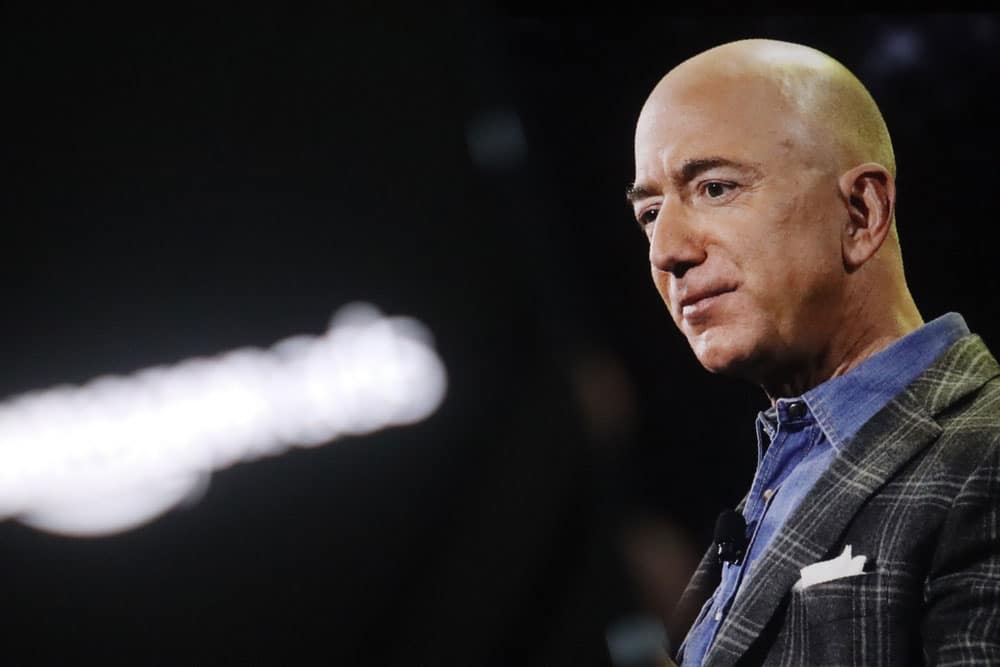
The Quarter-Trillion Dollar Man: With an estimated net worth of $242 billion, Jeff Bezos ranks as the world’s fourth richest person. The Amazon founder embodies wealth on a scale so vast it strains comprehension. His journey—from Princeton graduate to e-commerce pioneer, media owner, and space entrepreneur—has transformed him into a figure whose fortune rivals the GDP of mid-sized nations.
For business leaders, understanding Bezos’ wealth is more than trivia. It offers a window into how fortunes are structured, deployed, and leveraged in ways that shape industries and public discourse alike.
1. A “Middle-Class” CEO Salary—Backed by Trillions in Stock
During his years as Amazon’s CEO, Bezos took home an official salary of just $81,840 in 2020—a figure that classifies as middle-income in California.
But the modest salary is misleading. The real engine of his wealth has always been his Amazon equity stake, which ballooned as the company reshaped global commerce. Even after stepping down as CEO in 2021, Bezos remains Amazon’s largest shareholder and executive chairman.
The lesson: For CEOs, wealth is rarely about salary. It’s about equity ownership in businesses with durable moats.
2. He Makes More in a Second Than Most Do in a Month
Breaking Bezos’ income into bite-sized numbers makes the scale staggering:
- $8.9 billion per month
- $2.25 billion per week
- $321 million per day
- $8 million per hour
- $3,715 per second
That last figure is especially striking: in one second, Bezos earns what many households make in a month.
For perspective, if Bezos dropped a $100 bill, it would literally not be worth the time to bend down and pick it up.
3. First to $200 Billion
In August 2020, Bezos became the first individual in history to surpass a net worth of $200 billion, beating out Elon Musk and Bernard Arnault in the race for financial supremacy.
While fortunes fluctuate with market valuations, Bezos’ milestone reflects his enduring position in the global wealth hierarchy. It also underscores the extraordinary leverage embedded in Amazon’s stock, which remains the cornerstone of his fortune.
4. Buying the News—for Pocket Change
In 2013, Bezos purchased The Washington Post for $250 million through his investment firm, Nash Holdings LLC.
For most billionaires, $250 million would represent a bold, high-stakes acquisition. For Bezos, it was the equivalent of pocket change—about 30 hours of his earnings at current rates.
The investment transformed The Post into a digitally forward media company, giving Bezos influence in national discourse while diversifying his portfolio beyond tech.
5. Billions Spent Reaching for the Stars
Perhaps the most audacious deployment of Bezos’ wealth is his funding of Blue Origin, the private space exploration company he founded in 2000.
Bezos reportedly spends $1 billion annually of his own fortune on Blue Origin.
His personal investment to date is estimated at $15–20 billion.
In 2021, Bezos himself flew aboard a Blue Origin vessel, New Shepard, crossing the Kármán line 62 miles above Earth in an 11-minute flight.
That trip cost an estimated $2.5 million per minute. Seats have auctioned for up to $28 million, with proceeds directed to charity.
For Bezos, space is not simply a vanity project. It is a vision for humanity’s future—and a demonstration of how private capital can accelerate industries once thought the exclusive domain of governments.
Lessons for CEOs and Investors
Bezos’ fortune offers several insights that resonate far beyond personal net worth:
- Equity beats salary. Sustainable wealth is built on ownership, not paychecks.
- Scale compounds returns. Amazon’s global platform gave Bezos a multiplier effect few rivals could match.
- Deploy capital strategically. From media to space, Bezos uses wealth to shape both industries and public debate.
- Think beyond markets. Blue Origin shows how vision-driven capital can tackle problems governments may underfund or move too slowly to solve.
Jeff Bezos’ $242 billion fortune isn’t just a testament to e-commerce dominance—it’s a case study in capital deployment, brand building, and visionary ambition. From living on a nominal salary while riding Amazon’s equity wave, to buying a national newspaper with pocket change, to pouring tens of billions into space exploration, Bezos demonstrates the scale, speed, and scope with which modern billionaires can operate.
For CEOs, investors, and policymakers, the lesson is not simply about how much Bezos is worth. It’s about how he uses wealth to build moats, reshape industries, and pursue ambitions beyond Earth itself.
Have you read?
The World’s Best Medical Schools.
The World’s Best Universities.
The World’s Best International High Schools.
Global Mobility and Wealth Security: Why Citizenship by Investment (CBI) and Residency by Investment (RBI) Programs Are Essential for Global Executives and High-Net-Worth Individuals.
Add CEOWORLD magazine as your preferred news source on Google News
Follow CEOWORLD magazine on: Google News, LinkedIn, Twitter, and Facebook.License and Republishing: The views in this article are the author’s own and do not represent CEOWORLD magazine. No part of this material may be copied, shared, or published without the magazine’s prior written permission. For media queries, please contact: info@ceoworld.biz. © CEOWORLD magazine LTD