Tesla’s Stock Rebound: What Elon Musk’s $1 Billion Bet Means for Investors

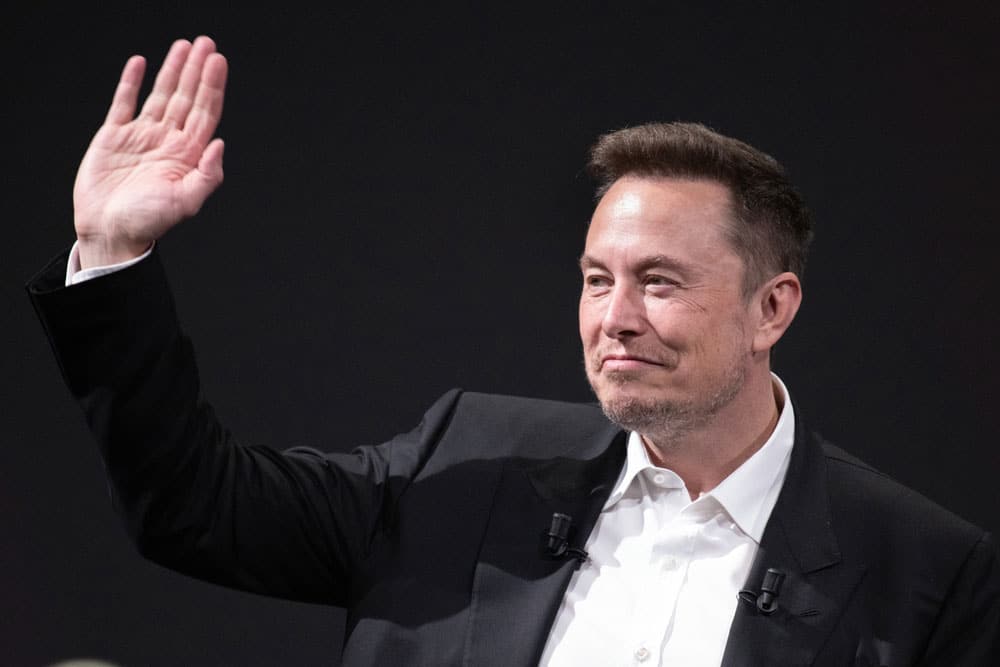
Tesla’s Stock Rebound and Musk’s $1 Billion Purchase
A Signal That Shook the Market: In September 2025, Elon Musk’s $1 billion open-market purchase of Tesla stock marked his first direct buy since February 2020. The move immediately lifted shares by 6%, reversing weeks of volatility and reigniting investor debates over Tesla’s long-term trajectory.
For Musk, the purchase is not just financial—it is a symbolic alignment with shareholders, reinforcing his leadership at a critical juncture. For investors, however, the implications are more complex: Is this the start of a durable rebound or simply a temporary rally against deep structural challenges?
Leadership Signals: Musk Buys, Executives Sell
Musk’s purchase comes against a backdrop of widespread insider selling. Tesla executives sold over 50% of their collective holdings in 2025, a striking contrast to Musk’s personal accumulation.
- Tom Zhu, head of global manufacturing, trimmed 82% of his stake, raising red flags about operational headwinds.
- CFO Vaibhav Taneja sold 6,000 shares in July, cashing out $1.75 million.
This divergence is stark: Musk’s buy signals conviction and long-term alignment, while executive sales raise questions about near-term confidence in execution. For board members and institutional investors, the split underscores the risk-reward paradox embedded in Tesla’s stock.
The $1 Trillion Compensation Plan
Central to Musk’s bet is his proposed $1 trillion performance-based compensation plan. To unlock the reward, Tesla must achieve:
- $8.5 trillion market capitalization by 2035
- Production of 20 million vehicles annually
- Deployment of 1 million robot taxis
- Commercialization of 1 million Optimus humanoid robots
These targets border on the audacious. Yet the board’s endorsement reflects its belief in Musk’s ability to leapfrog traditional auto metrics and reposition Tesla as a multi-sector AI, robotics, and energy platform, not just an electric car company.
For long-term investors, the stakes are clear: If Tesla achieves these milestones, Musk’s compensation will be justified by outsized shareholder returns. If not, the plan risks dilution and shareholder litigation.
Strategic Entry Point or Risk Trap?
Tesla’s rebound invites a pivotal investor question: Is this a strategic entry point?
Bullish Case:
- Energy Storage Growth – Tesla’s Megapack business is scaling rapidly, capturing utility contracts amid global grid decarbonization.
- AI Leadership – Tesla’s self-driving software, Dojo supercomputer, and robotics initiatives could redefine future mobility and labor markets.
- Musk’s Alignment – A $1 billion personal bet strengthens investor confidence in his commitment to execution.
Bearish Case:
- Competitive Pressure – Legacy automakers and startups alike are eroding Tesla’s EV lead, particularly in China and Europe.
- Insider Selling – Key executives’ exits suggest internal caution about near-term profitability.
- Execution Risk – Scaling AI, robotics, and energy storage simultaneously introduces capital strain and regulatory exposure.
For institutional investors, the calculus is binary: Tesla is either the ultimate long-term compounding machine or a high-profile case study in overreach.
The AI and Robotics Gambit
Tesla is positioning itself as an AI-first enterprise. Its autonomous driving software, backed by the Dojo AI training platform, is designed to process petabytes of real-world driving data—an asset no competitor can replicate at scale.
Meanwhile, Musk’s Optimus humanoid robot project has moved from prototype to limited pilot deployment in Tesla factories. If commercialized at scale, Optimus could disrupt labor-intensive industries, from logistics to healthcare.
For policymakers, this raises regulatory and ethical challenges: how to govern autonomous systems, protect labor markets, and mitigate concentration of AI power in a single firm.
Energy Storage: The Silent Growth Engine
While headlines often focus on cars and AI, Tesla’s energy storage business may be its most underappreciated driver of value.
- Megapack deployments doubled in 2025, addressing grid reliability amid extreme weather events.
- Energy margins are improving, aided by falling battery costs and higher demand for renewable integration solutions.
For wealth managers and institutional allocators, energy storage offers Tesla a recurring revenue stream, less cyclical than vehicle sales and less speculative than robotics.
Competitive and Regulatory Headwinds
Tesla’s path forward is anything but smooth.
- China: Domestic EV leaders like BYD continue to expand aggressively, challenging Tesla’s market share.
- United States: Political scrutiny over Musk’s influence and Tesla’s AI safety protocols could tighten regulatory oversight.
- Europe: Stringent emissions and labor regulations may add compliance costs and operational complexity.
Insider selling only magnifies these risks, raising doubts about Tesla’s ability to deliver consistently in multiple geographies and industries.
High-Risk, High-Reward for Investors
Tesla today embodies the paradox of modern capital markets: a company both lauded as visionary and criticized as overvalued. Musk’s $1 billion buy underscores his confidence, yet executive selling and ambitious compensation targets highlight the fragility of execution.
For C-Suite executives, private equity leaders, and policymakers, Tesla represents more than an equity story—it is a test case for how visionary leadership, disruptive innovation, and capital allocation intersect in the 21st century.
For investors, Tesla remains a high-risk, high-reward proposition. Entry today could either lock in generational returns if Musk delivers—or expose portfolios to significant downside if execution falters.
Tesla’s September 2025 rebound is more than a stock story—it is a leadership signal, a governance test, and a strategic dilemma. Musk’s $1 billion bet invites investors to consider not just Tesla’s next quarter, but the next decade of industrial transformation.
As markets weigh the tension between Musk’s conviction and executive caution, the decision for investors is stark: bet on Musk’s vision of Tesla as a global AI, robotics, and energy empire—or stand aside and watch history unfold.
Have you read?
Countries by Average Wealth per Person.
World’s most peaceful countries.
Largest and Smallest Countries (Population).
Countries With The Highest Income And Wealth Equality.
Countries with the Fastest Population Decline.
Add CEOWORLD magazine as your preferred news source on Google News
Follow CEOWORLD magazine on: Google News, LinkedIn, Twitter, and Facebook.License and Republishing: The views in this article are the author’s own and do not represent CEOWORLD magazine. No part of this material may be copied, shared, or published without the magazine’s prior written permission. For media queries, please contact: info@ceoworld.biz. © CEOWORLD magazine LTD