Engineering Excellence: Satish Kumar’s Journey in Cloud-Native Architecture and AI Innovation

The convergence of artificial intelligence, cloud-native architecture, and data engineering has redefined how enterprises approach digital transformation. Organizations across banking, finance, and insurance sectors are increasingly seeking leaders who can navigate complex technical landscapes while delivering measurable business outcomes. The most successful engineering leaders combine deep technical expertise with strategic vision, building scalable solutions that drive innovation while managing cross-functional teams across global operations.
Modern cloud-native development demands a comprehensive understanding of distributed systems, microservices architecture, and advanced data platforms. As enterprises migrate from legacy systems to contemporary cloud infrastructure, the need for leaders who can architect scalable solutions while maintaining operational excellence has never been more critical. Success in this domain requires practitioners who excel at both hands-on technical implementation and strategic program management.
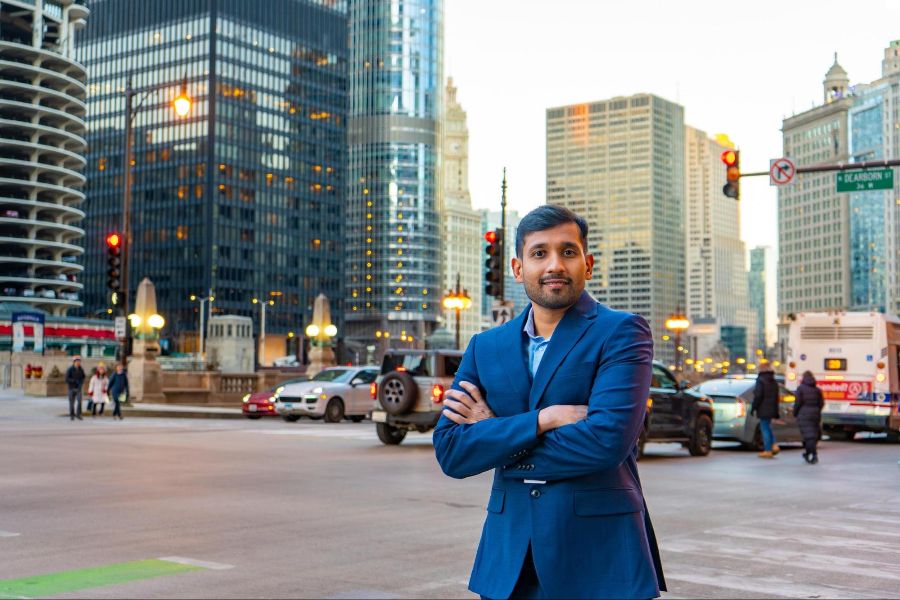
With over 14 years of industry experience spanning Banking, Finance, and Insurance sectors, Satish Kumar exemplifies the modern engineering leader. His journey encompasses building scalable data platforms, implementing MLOps frameworks, and architecting cloud-native solutions that have delivered millions in cost savings and operational improvements. As a certified AWS Machine Learning Engineer, Solution Architect, and MuleSoft Integration Architect, Satish has established himself as a leader in enterprise-scale digital transformation.
Architecting Cloud-Native Transformation
The migration from legacy systems to modern cloud-native architecture represents one of the most significant challenges facing enterprise organizations. Successful transformations require careful planning, robust architectural design, and seamless execution that minimizes business disruption while maximizing operational improvements.
“My approach to cloud migration emphasizes gradual transformation with measurable outcomes at each stage,” Satish explains, drawing from his experience leading complex modernization initiatives. “Whether transitioning WebForms applications to React-based microservices or decommissioning legacy products, the focus remains on delivering business value while building scalable, maintainable systems.”
Throughout his career, Satish has led the decommissioning of over 30 legacy products, resulting in $6M in annual cost savings while freeing significant engineering resources. These transformations leverage modern technologies including React, Java, MuleSoft, and Azure microservices, deployed through robust CI/CD pipelines that ensure continuous integration and seamless deployment. The architectural decisions made during these migrations create foundations for future innovation while maintaining the reliability and security required in regulated industries.
Pioneering AI and Machine Learning Operations
The integration of artificial intelligence and machine learning into enterprise operations has evolved from experimental initiatives to business-critical capabilities. Building effective ML operations requires not only understanding algorithms and models but also creating robust infrastructure that supports the complete machine learning lifecycle from development through production deployment.
Satish’s leadership in AI adoption includes developing his organization’s first MLOps framework and Data Science foundation, resulting in a 20% increase in model deployment frequency. “Establishing standardized MLOps practices transforms how organizations approach machine learning,” he notes. “By creating repeatable processes for model training, validation, and deployment, we enable data science teams to focus on innovation rather than infrastructure challenges.”
His work with Generative AI demonstrates the practical application of Large Language Models in solving real-world business problems. By partnering with fraud operations, compliance, and data governance teams, Satish architected an AI-powered fraud investigation assistant leveraging LLMs for automated fraud analysis and document summarization. This sophisticated system integrates Retrieval-Augmented Generation (RAG) pipelines utilizing Amazon OpenSearch vector databases, enabling dynamic retrieval of historical fraud cases and real-time enrichment of LLM prompts. The engineering of complex transaction features using Python, Pandas, and NumPy creates enriched datasets that enhance LLM-driven predictions, demonstrating how traditional data engineering excellence amplifies cutting-edge AI capabilities.
Building Scalable Data Platforms
Modern enterprises generate unprecedented volumes of data from diverse sources, creating both opportunities and challenges for organizations seeking to derive actionable insights. Effective data platform engineering requires designing architectures that handle massive scale while maintaining performance, reliability, and accessibility across the organization.
Satish’s expertise spans the complete data platform stack, from designing robust ETL processes to implementing real-time data processing solutions. His work with AWS technologies including Athena, Redshift, S3, and Glue, combined with Infrastructure as Code using Terraform, creates scalable data ecosystems that support both operational analytics and advanced machine learning workloads.
“Data platform design must balance immediate analytical needs with long-term scalability,” Satish observes from his experience building enterprise data solutions. “Whether designing data lakes, implementing data governance frameworks, or optimizing query performance, the goal is creating systems that empower data consumers while maintaining data integrity and security.”
His contributions include evolving messaging and personalization for over 222 million customers through Salesforce Data Cloud integration, demonstrating how effective data platform architecture enables personalization at unprecedented scale. Additionally, his leadership in driving infrastructure optimization resulted in $20M in cost savings while improving system performance and reliability.
Leading Global Cross-Functional Teams
Technical excellence alone cannot drive successful enterprise transformations. The most effective engineering leaders excel at building and scaling teams, managing stakeholder relationships across organizational boundaries, and creating cultures of innovation and continuous improvement.
Throughout his career, Satish has built and scaled cross-functional teams ranging from 5 to 20+ members across onshore and offshore locations. “Successful team leadership in distributed environments requires clear communication, establishing accountability structures, and creating psychological safety for innovation,” he explains. “Mentorship and knowledge sharing strengthen both individual capabilities and organizational resilience.”
His approach to program management includes establishing robust OKR tracking, conducting regular Root Cause Analysis reviews with senior leadership, and managing complex dependencies across technical and business stakeholders. This comprehensive approach ensures alignment between technical execution and business objectives while maintaining transparency and accountability throughout program delivery.
Continuous Innovation and Technical Mastery
The rapidly evolving landscape of cloud computing, artificial intelligence, and data engineering requires unwavering commitment to continuous learning and professional development. Staying current with emerging technologies while deepening expertise in foundational principles creates the versatility necessary for long-term success.
Satish maintains cutting-edge expertise through hands-on experience with emerging technologies including LLM prototyping, GenAI applications, and computer vision, while simultaneously strengthening foundational capabilities in distributed systems, API design, and data architecture. His multiple AWS certifications and MuleSoft Integration Architect certification demonstrate commitment to validated expertise across diverse technology domains.
“Technology evolves rapidly, but fundamental engineering principles remain constant,” Satish notes. “Success comes from balancing exploration of emerging capabilities with disciplined application of proven architectural patterns and best practices.”
About Satish Kumar
Satish Kumar is a distinguished Senior Engineering Leader with 14+ years of comprehensive industry experience developing scalable, cloud-native software with AI/ML solutions and data analytics products for Banking, Finance, and Insurance sectors. As a certified AWS Machine Learning Engineer, Solution Architect, Developer, and MuleSoft Integration Architect, he specializes in building scalable data platforms, implementing MLOps frameworks, and architecting cloud-native solutions that drive measurable business outcomes. His technical proficiency spans the complete modern engineering stack including AI/ML, Python, Java, React, MuleSoft, AWS services, and Infrastructure as Code. With proven leadership experience managing global cross-functional teams and delivering multi-million dollar programs, Satish excels at translating complex business requirements into scalable technical solutions while fostering cultures of innovation and continuous improvement.
Have you read?
Have you read?
From Visionaries to Victors: Why Acculturation, Not Just Strategy, is the Key to Business Success.
Choose Your Poison?
A new competitive era: NYSE and Nasdaq joining Y’all Street in Texas.
How to Ensure Value in Your AI Investment.
The CEO’s Practical Strategy for Managing Modern Risk and Compliance in 2026.
Add CEOWORLD magazine as your preferred news source on Google News
Follow CEOWORLD magazine on: Google News, LinkedIn, Twitter, and Facebook.License and Republishing: The views in this article are the author’s own and do not represent CEOWORLD magazine. No part of this material may be copied, shared, or published without the magazine’s prior written permission. For media queries, please contact: info@ceoworld.biz. © CEOWORLD magazine LTD